
Travel
Why a Danube river cruise is the perfect father-son getaway
A seven-night Danube cruise becomes a chance for one father to reconnect with his son and reflect on how quickly childhood passes.
By Mark Dapin
When my son was small, he used to crawl beneath the bedclothes with me in the morning. I held him as tight as a belt, his skin against my skin.
Then one day – when he still seemed desperately young – he stopped coming into my bedroom for a cuddle, and I knew that he never would again.
Today my son is 21 years old. We are the same size, and he wears my clothes. Late last year, I took him on a seven-night voyage up the Lower Danube on the shiny, confident AmaMagna, the largest river cruise ship in Europe.
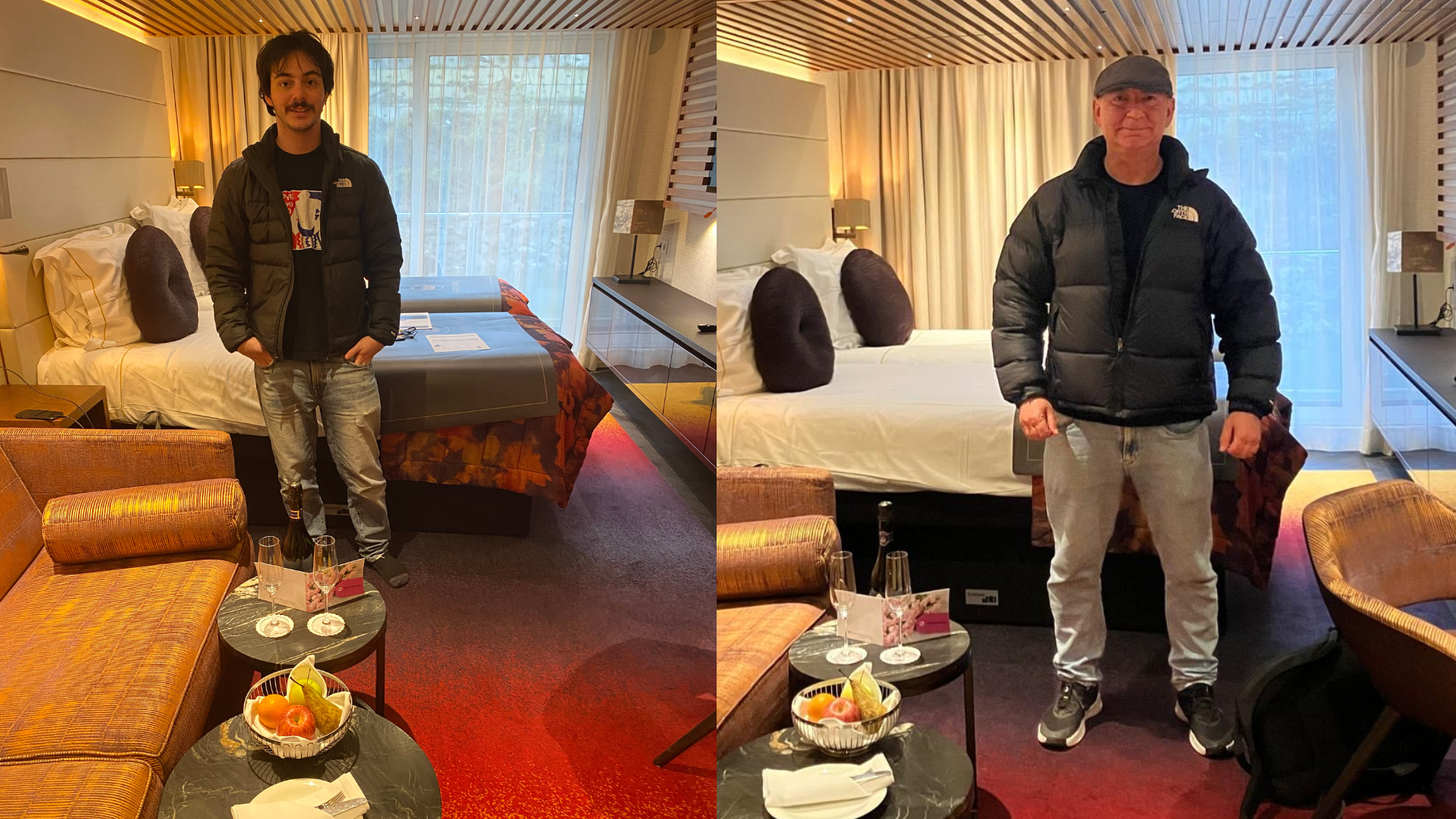
We sailed from Romania to Hungary, sharing a stateroom where the gap between our beds was the width of my fist.
Quietly, almost unnoticeably, a river-cruise ship respires. It yawns and it pants and it sighs. Each dawn, in a parody of breathing, sailors smoke cigarettes on the prow.
My son and I took breakfast at the inexhaustible buffet in the ship’s Main Dining Room. I watched him work through the less exotic items on the counters with the inexplicable pride parents feel when they see their children eat.
Every afternoon, we had a choice of shore excursions: generally, we could select from a cycle ride, a food-and-wine tasting or a historical tour. I let my son make the bookings, so he selected every trip with a fortress on the itinerary.
I would have picked the same ones. But the echoes of my son’s boyhood – all those plastic helmets, swords and shields, the souvenir heraldry and the frowning knightly aspirations – were far louder than the generally imperceptible hum of the ship’s engines.
At 62, I was one of the younger passengers on the cruise. Most of the travellers of my generation were accompanying their parents rather than their children, sometimes helping them to walk: holding them by the hand or leading them gently by the elbow, as I once steadied my son. And in their forgiving shuffle, I saw what was to come.
The age disparity meant that my son and I overestimated the level of difficulty of the walking tours, which were graded from "easy" to "challenging". In the Bulgarian town of Veliko Tarnovo, we hesitated over an “active adventure” involving a hike to the “summit” of Tsarevets Fortress – until we saw that the peak of the medieval stronghold was only a very short distance from its base.
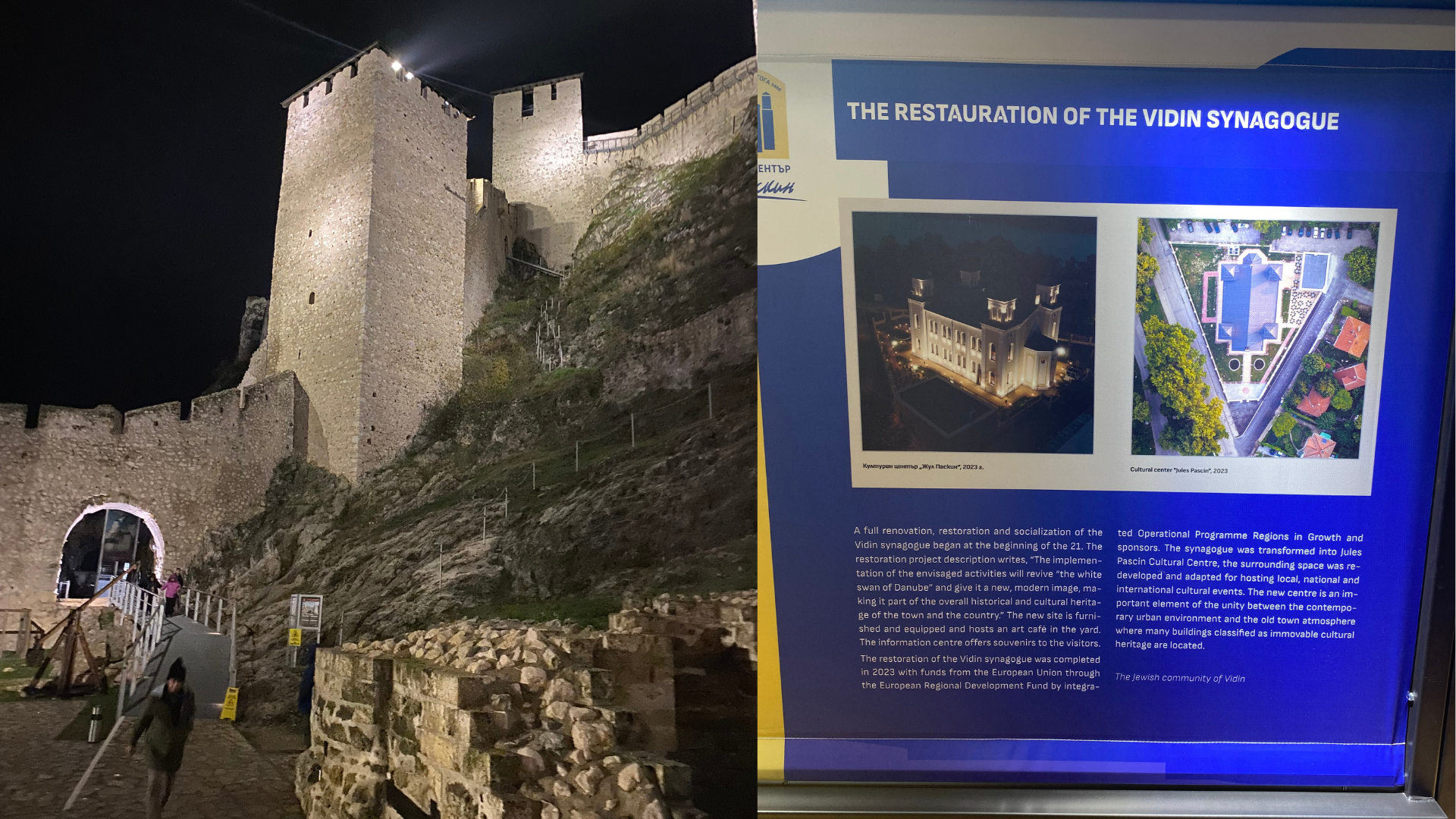
At the Bulgarian port of Vidin, the “brisk walk” through the riverside park might have been considered a gentle stroll in other circumstances. The only excursion that could have been challenging involved climbing 200 steps to the top of the water tower in Vukovar, Croatia, but it turned out there was an unadvertised lift for less energetic visitors.
We generally agreed on the highlights: the best castle was Golubac Fortress in Serbia; the best meal was the Chaîne des Rôtisseurs dinner on board the ship, where my son realised it was possible to order two main courses (which sat lightly on top of his three entrées); the best folkloric show was the astonishingly gymnastic Serbian folk dancing; the best church was St Peter’s Basilica in Pécs, Hungary, where our guide sang a beautiful Ave Maria in the crypt; and the best hour was complimentary cocktail hour.
As a parent, even now I felt the need to convince myself that the holiday was “educational”. And it was. After all, while we were cruising through what used to be the Soviet Bloc, my son was writing a uni essay about The Communist Manifesto. Or, at least, he was supposed to be.
I never saw any evidence.
I occasionally enhanced his learning with my own perceptive observations about history, geography, gastronomy, and whether there was time to get one more order in before the bar started to charge – but I suspect he only gave me his full attention when there was a free drink at stake.
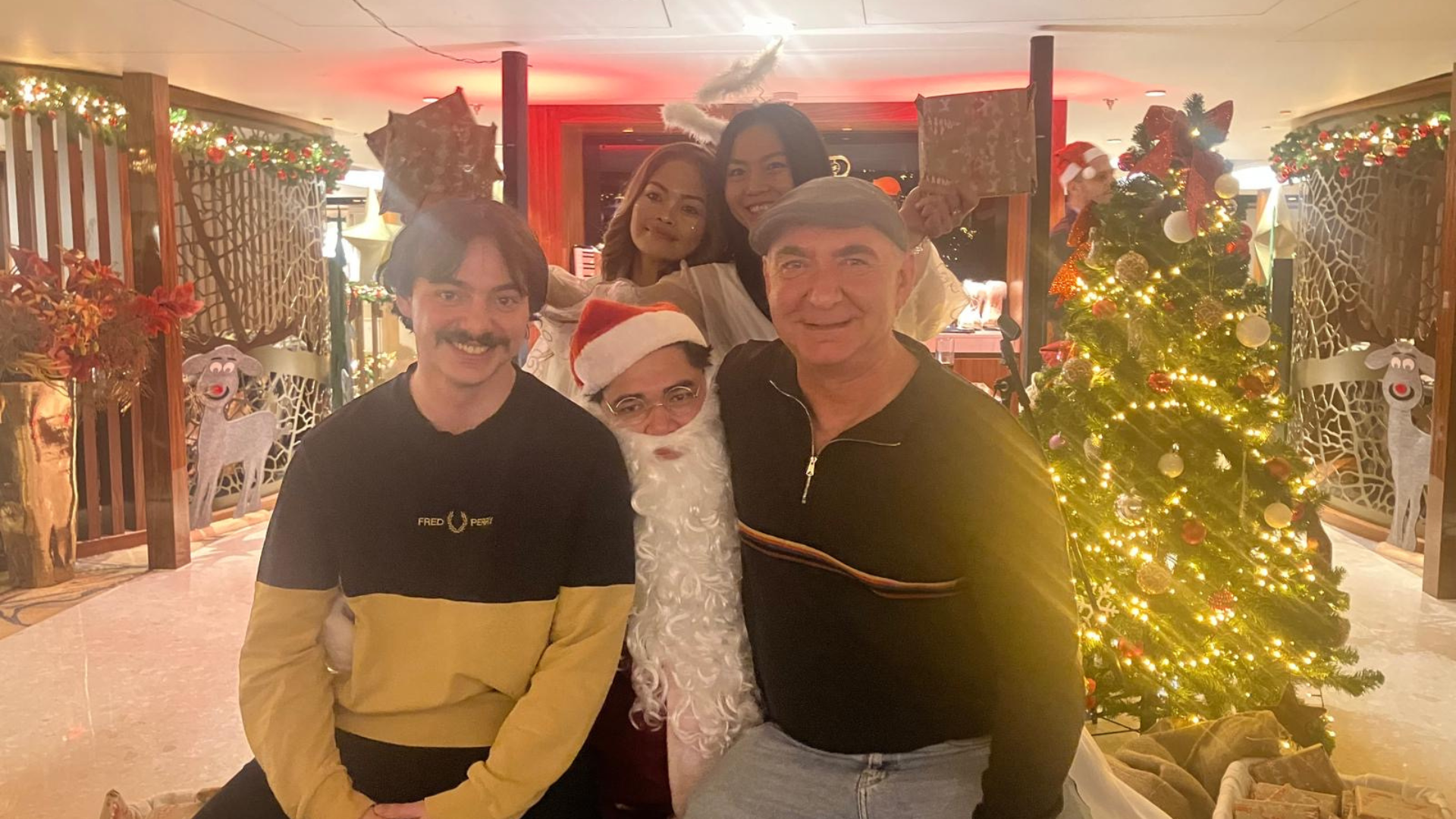
Towards the end of the cruise, came a chance for passengers to have their photograph taken sitting on Santa’s knee.
It was late in the evening, but I was insistent.
“No,” I said. “No, I won’t.”
And yet, moments later, I found myself following my son towards an anxious sailor dressed as Father Christmas, then crushing his thighs beneath our weight (see photo).
At night, AmaMagna sailed silently in the darkness. When I awoke in the cabin, I could not tell whether we were moving or still. I rolled over and watched my son breathe, with the same anxious joy I used to feel when I checked on him while he was sleeping as a little boy.
All images courtesy of Mark Dapin
Read these next: