
Lifestyle
From shame to pride: Gloria's journey back to her heritage

Gloria found so much power in embracing her natural hair and saying ”Actually, I am enough.”
By Elli Jacobs
Gloria Tabi at 50, is confronting hair shame and celebrating authenticity.
I’m an African Australian woman, and for most of my life, I wore wigs, not for fashion, not for fun, but to cover a shame I didn’t yet know how to name.
The first time I really became aware that my natural hair was seen as a problem wasn’t because anyone said it to my face. Nobody told me outright, “You can’t wear your natural hair.” But what I saw all around me was that every Black woman I admired - older, younger, professional, was doing the same thing: covering her natural hair. Michelle Obama once admitted she wore wigs in the White House because if she’d worn her natural hair, people wouldn’t have taken her seriously.
That was the message. Hide your real hair, and you’ll be acceptable. Show it, and you’ll be invisible. So, I followed the lead, thinking, if I want to work in an office, if I want to be taken seriously, I need to do what they’re doing. Natural hair wasn’t an option.
Why I have always covered my hair
I was already in my twenties when I began covering my natural hair. Even at university, before I had even entered the workforce, I wore wigs and extensions. Looking back now at photos from those early years in Australia, I can’t find a single image of myself with my natural hair. That absence feels heartbreaking.
Part of the reason is also the feedback I received. Each time I wore a wig, the compliments would flow: “You look so professional.” “Your hair looks nice.” But when I wore my natural hair, there was only silence. No affirmation, no acknowledgment, just a quiet reminder of what was considered acceptable and what wasn’t.
That shame lingered for a very long time, and it was heavy - both literally and metaphorically. Wearing a wig felt like carrying weight not just on my head, but on my spirit. At home, I would peel it off and feel relief, yet the moment the doorbell rang, or I needed to dash out for milk, I’d grab it and slip it back on. In those years, I could only be myself behind closed doors. Imagine carrying that burden every single day, for years.
The damaging stereotypes of natural hair
Over time, I came to realise that the shame was never really about the hair itself. It was about what my hair had come to symbolise. Natural Black hair has been coded with so many ugly stereotypes: uneducated, uncivilized, incompetent, the “village girl.” Those messages seep into your bones, until you begin to believe that to be taken seriously, you must erase or disguise part of yourself. It’s absurd, of course, because here I was, a university graduate, an educated professional woman, yet the world still judged me by my hair. That narrative isn’t just false; it’s damaging. And it needs to change.
But the deeper issue runs beyond individual experience. The real problem isn’t only how we see ourselves; it’s how society chooses to see us. For young Black women stepping into the workforce, the pressure is immediate and relentless: wear a wig, straighten your hair, conform, or risk not even getting the interview. And without the interview, you can’t get the job. Without the job, you can’t support your family. This isn’t simply a matter of self-esteem; it’s a matter of systemic racism. It’s about survival.
Research has confirmed what so many of us already knew. A 2023 study co-commissioned by Dove and LinkedIn found that Black women’s hair is 2.5x more likely to be labelled “unprofessional.” Race-based hair discrimination continues to undermine opportunities, erode confidence, and shrink possibilities. It has gone on far too long and it has to stop.
One day, I refused to keep hiding my hair
Just 18 months ago, I decided I’d had enough. I quit hiding.
The turning point came after I saw a young Black girl, maybe 10 years old, wearing a wig, and it shook me to my core. I thought, what am I doing?
At the time I was speaking on anti-racism, giving keynotes, positioning myself as a leader, all while wearing a wig. And I realised I wasn’t walking the talk. If I was going to challenge the system, I needed to lead by example.
I let my natural hair grow out and began confronting the shame I had carried since girlhood. That decision wasn’t just about hair, it was about reclaiming my identity, my self-worth, and my voice.
It hasn’t been easy. One of the hardest moments was something as simple as sitting in my car outside a grocery store. I’d just taken the wig off, and we were out of milk. And yet, I sat frozen in the car, terrified of walking outside with my natural hair. That’s the level of fear I carried. And to be honest, it still takes courage. Even now, I sometimes have to build myself up to walk into certain spaces.
Accepting my full self has been so powerful
But the responses from those around me have been powerful and encouraging. Someone once said, “You look free”, and those words hit me hard. Because it’s true, I feel light in a way I never did with a wig. And the truth is, I never liked wigs. Every time I put one on, it felt like a small trauma, like forcing myself into something unnatural. No wonder people say I look freer.
This journey led me to write ENOUGH, a book about what it means to stop performing perfection just to belong. To reach a point where you say, Actually, I am enough. From there, real transformation can happen.
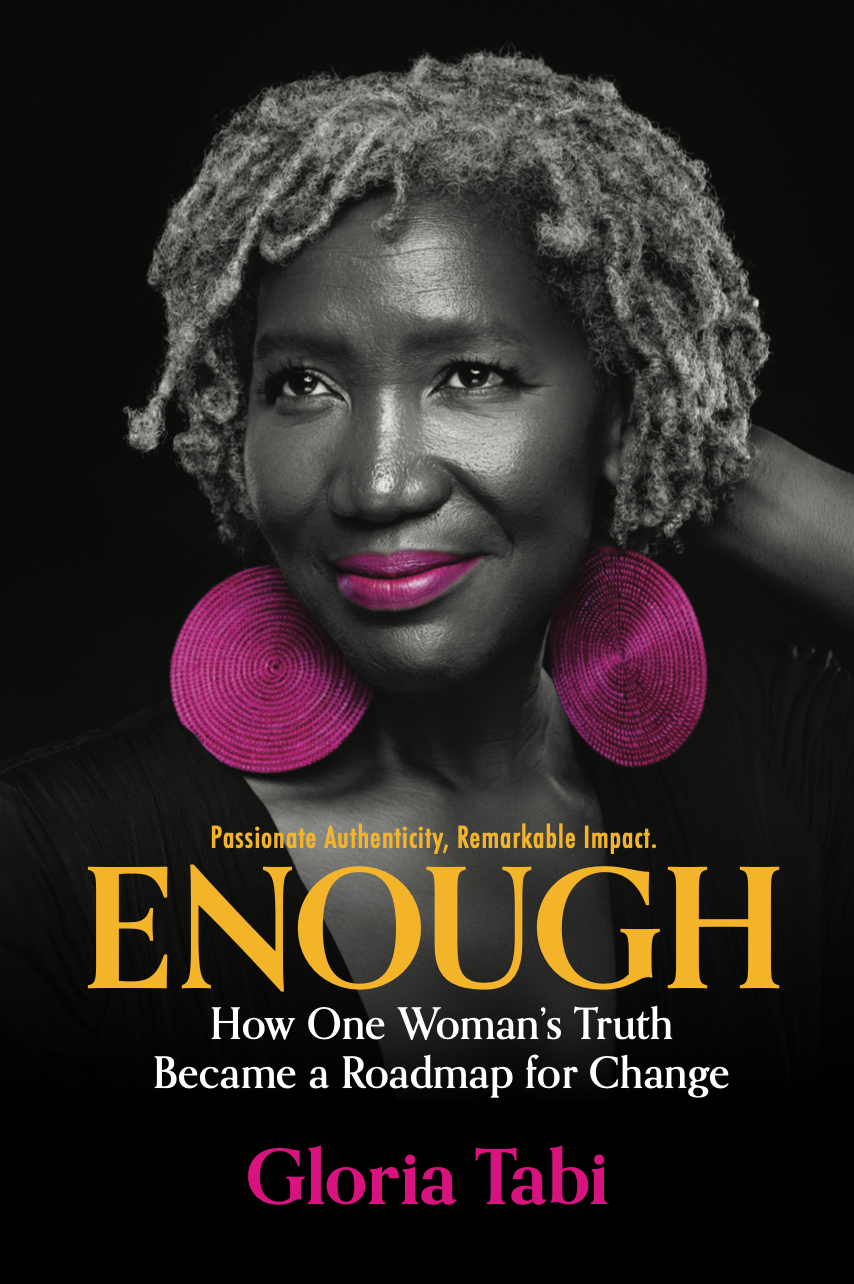
Writing the book was deeply healing. One chapter in particular, “Bad Head Day” - brought me to tears. I cried like a child writing it. Because for us, it wasn’t just the occasional bad hair day. It was every day. I had to revisit memories of sitting between my mother’s legs for hours while she straightened my hair, the hot comb burning my ear, chemicals scalding my scalp until I had sores that lasted weeks. We couldn’t just wake up, like so many white kids, and run outside to play. We always had to be “made presentable.” Reliving that pain was brutal, but it also set me free.
I’ve also launched Enable Women Africa, a platform helping women and girls unlearn inherited shame, embrace their truth, and lead with pride, starting with our hair, but reaching far beyond it.
I even gave a TEDx talk, called The Truth About Hair Discrimination, on this very subject, because I want people to understand the weight of that shame and how it shapes Black women’s lives in ways that are rarely spoken about.
More than a beauty contest
Surprisingly, in July, I entered a pageant - the Legacy International Pageant representing Australia, something I never thought I’d do. Every Black woman before me had worn a wig on that stage. I thought, No. Not me. I’m not wearing a wig. I’m not colouring my hair. This is me, gray hair and all. And I did it and I actually won the People’s Choice Award.
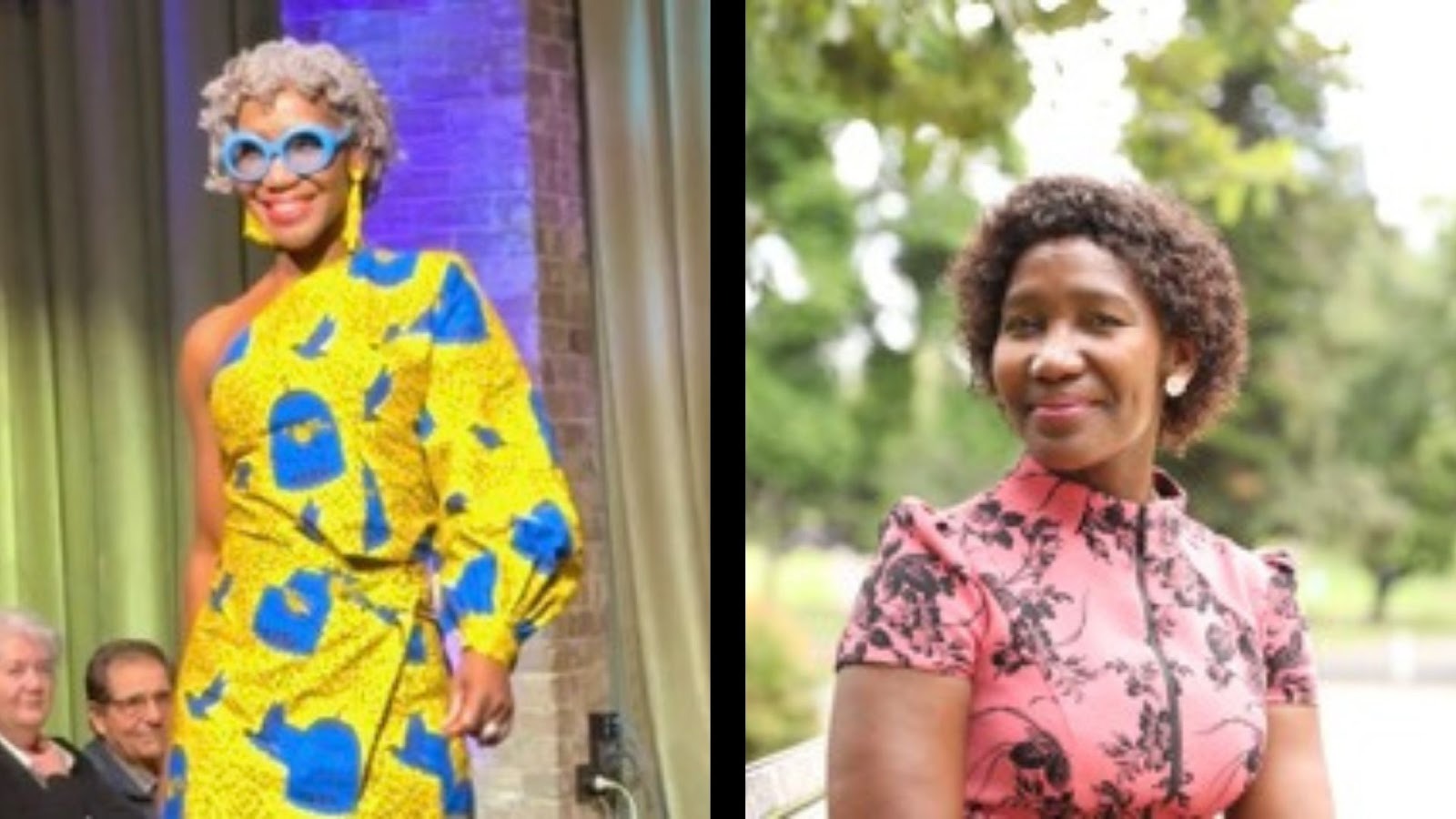
The messages I’ve received since then have been overwhelming. Women in my community have written to me saying, Thank you for doing this. I could never dream of it. That’s when I knew: this isn’t just my story. It’s about changing the narrative for the next generation. Showing my daughter, my younger self, and every girl watching that we don’t need to change who we are to lead. We are already enough.
To be honest though, while it was a powerful moment in my journey it was also really hard. At the pageant, surrounded by stunning younger women and Eurocentric beauty standards, I had a fleeting thought: If I put a wig on, I’d look ten or fifteen years younger. But then I stopped myself.
Read why more people are embracing the grey.
I kept going because I wanted to prove a point. Even when I burned my arm with a steam iron from stressing over it, I persevered. Because it wasn’t just about me - it was about being a role model for my daughter and for young Black girls who need to see themselves reflected.
I also remembered how much I hated wearing the wig, how stifling it felt, how hot and heavy. And I thought, No. Never again. My hair can breathe now, and so can I.
We are enough exactly as we are
These days, I see the same patterns repeating with younger girls. They’re doing exactly what we did. And that’s one of the things that scared me most, especially as a mother with a daughter. I didn’t want her to grow up thinking she had to straighten, hide, or manipulate her hair to be accepted. That made it even more imperative for me to live by example, because our kids don’t just hear what we say, they see what we do.
What I hope they take from this - my daughter, and every young girl is that they are enough exactly as they are. They don’t need to add anything, change anything, or hide themselves to be worthy. That was the bigger picture. That’s why I kept going.
If I could speak to my younger self, the little girl who first believed her hair wasn’t enough, I’d say: Girl, your hair is enough. Don’t put chemicals in it. Don’t damage your follicles. Just rock your natural hair, because it’s healthy and beautiful.
My hair is actually the healthiest it has ever been now, without all the chemicals and straighteners. If I could go back, I’d tell her to keep being herself and let the world catch up.
Shame is such a heavy emotion and transforming it into pride has been a long journey. What helped me most was the foundation my parents gave me. As a child, I was always told I was beautiful, and even though I lost my way in the noise of racism and sexism, those voices came back to guide me. I realised I needed to believe my intuition more - the inner voice that already knew my worth. The problem was, I let the world’s voice be louder. Coming back to my centre meant trusting those inner affirmations again.
Be gentle with yourself
To women and young girls still hiding parts of themselves, I would say: Be gentle with yourself. This doesn’t happen overnight - it’s a process. Surround yourself with people who really know you, who can remind you of your beauty and kindness when the world tries to tell you otherwise. It doesn’t have to be many people, even one person you deeply trust, whether it’s a parent, a partner, a friend, or a child. Hold close to their voices, because they know you better than the world does.
Now, I define beauty through authenticity. To me, showing up fully and truthfully as yourself is the most powerful form of leadership. Hiding makes us sick - physically, emotionally, spiritually. But authenticity heals. It brings us to centre, it brings vitality, and it brings freedom. That’s why I talk about “inspiring her freedom” - because freedom is life-giving.
Today, I feel lighter. Freer. And honestly, healthier. Authenticity is vitality and that has become my truth.
Feature image: courtesy of Gloria Tabi
Tell us in the comments below: What helped you embrace your authentic self?
Articles we think you’ll love: