
Lifestyle
Julie Goodwin wants us to let the light in
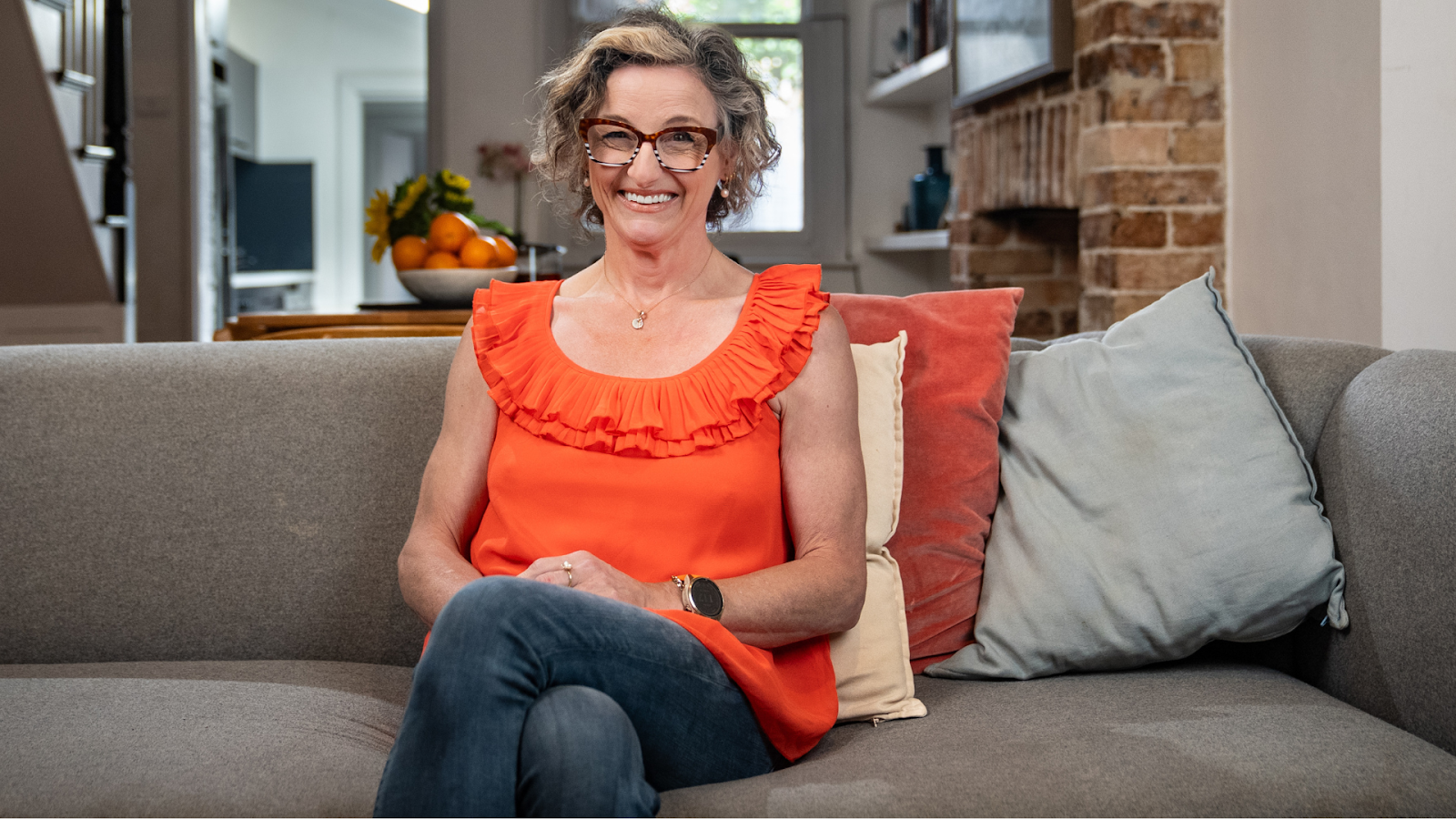
Citro’s newest ambassador has lived the full human experience – hitting huge highs and equally huge lows. After years of trying to do it all, she’s learned that real strength lies in speaking up without shame.
By Bron Maxabella
After burnout, anxiety and a hard reckoning with alcohol, Australian cooking megastar, Julie Goodwin has found a far kinder way to live. Her message is simple, human and very Aussie: talk about what hurts, ask for help early and build the “boring daily habits” that help keep you well.
Julie never set out to be a mental health spokesperson. She simply stepped into the role when her personal struggles became publicly commented on and she realised the cost of silence. She talks about shame and secrecy like fog on a windscreen, something that stops you seeing what’s right in front of you.
“Instead, when you talk about what's happened to you a couple of very important things happen,” Julie says. “One is that you may help somebody else and the second is the realisation that when there's nothing to reveal, there's nothing to be afraid of, you know. It's like stepping into the daylight.”
That’s the heart of Julie’s story and the reason it resonates so deeply with women who’ve spent years trying to hold up the sky for everyone.
Drop the act, name the load
Julie traces the pressure back years. The relentlessness of always saying yes because she feared that saying no would make everything fall apart. “[The build-up of] anxiety and the constant fear of what would happen if I slowed down,” she explains. “That I would lose my livelihood and fear that I might lose my family, that nobody would cope if I wasn't there to keep all those spinning plates up in the air.”
That’s a familiar soundtrack for many of us living through the messy middle. Parents ageing, kids (sometimes) launching, careers peaking and somehow we’re still the whole family’s operating system. The cost is often burnout, sometimes depression, occasionally a full-blown crisis. Julie says her spectacular crash came because she could no longer ignore what her body and brain were trying to tell her. The plates were shattering around her.
Be honest about crutches
Alcohol became her off switch to help cope with the load, then the switch got stuck. It’s a sensation that will be familiar to many of us and while Julie would never preach, she will ask you to look yourself in the eye and “ask yourself a simple question and give yourself the gift of an honest answer: ‘is this enhancing my life or is this holding me back?’.”
If you’re not sleeping, if a drink is the only way to settle your mind or enjoy an outing, Julie wants you to examine it. Especially if you are experiencing what she refers to as the “entitlement narrative”. She remembers the ‘I-deserve-this and it’s-my-only-downtime’ story very well. “I was leaning on that and it just got pointless,” she admits.
Shine a light on shame
Julie talks about her agony on a day in 2020 that she hit rock bottom. “There was no way I wanted to leave my family but I just honestly believed they would be a lot better off without me,” she says of her darkest moment.
Support from two complete strangers saved her life that day and later her husband stepped in to get her the help she needed. Her severe depression and anxiety led to her first hospitalisation for treatment, which she admits she initially fought against. “I will be grateful every single day of my life that I took the crossroads that I took and then I was helped on that,” she says.
In her memoir Your Time Starts Now she is open about needing to return for support many times. So she’s clear-eyed about the courage it takes to intervene or be intervened upon. “I'm not sure without a crisis how someone manages to confront their shame in order to say I need help, I need support,” she acknowledges. Friends and family risk rejection when they step in and people hide things they are ashamed of, even from themselves.
Ask for help, early and often
Part of the problem is cultural. Many of us were raised to be stoic in the face of adversity. Julie names it: “We don’t complain. We pick up, soldier on. We do all these things” but while she thinks gratitude is lovely, forced cheerfulness can be a gag.
She challenges the script: “you’re allowed to say you’re overwhelmed.” You’re allowed to acknowledge that you’ve taken on too much and change your mind.
Above all else, you’re allowed to ask for help. “I’ve been held up by a lot of people and by a lot of helping hands and that’s the most beautiful gift.”
If you’re somehow waiting for rock bottom before you reach out, she wants you to reconsider. “As soon as you say I need a hand out of this, there are so many hands to help you. Ask for help,” she pleads. People want to help. We all personally know the joy of being there for a friend, yet we deny others the same gift by not asking.
Build non-negotiables
After stepping back from radio and closing her cooking school, Julie has curated a life that serves her health first. She now evaluates opportunities with three clear tests: purpose, joy and bills. If an offer ticks none, it’s a hard no; if it ticks one, she looks at what else is going on; if it ticks two, it’s a likely yes. Tick all three and she’s fully invested.
Julie is practical about the tools that keep her steady, “I will do the work I have to do to stay healthy.” She lists her non-negotiables without apology: time in nature; daily movement; therapy; and medication. “I’m on medication. Which, while it works, I will remain on and I won’t be shamed about that no matter how hard people try – and they do,” she says.
If someone in your orbit disapproves, Julie has a question: “Are they your primary medical professional?” If not, their opinion isn’t valid.
She keeps regular psychology sessions because she knows that staying well is an active process, not a box you tick once. “I do think we see time and money for ourselves like that as selfish, I know I once did, but it’s the opposite. It’s really straightforward and clear to me now, but I never realised it before.
“I thought self-sacrifice was how I would give the best in my life until I sacrificed every single thing. I had nothing left for anybody.
“Without the right self-care, you end up being nothing for nobody, so it’s really the greatest gift you can give to the people in your life.”
Let the light in
Julie once described her crisis with brutal clarity: “It was like being at the bottom of a well and I could see the light above, but I just had no resources to climb up towards it.”
Recovery brought Julie back to the everyday joys she’d lost. Cooking again for the people she loves, being present with her granddaughter, feeling grateful without pretending. She’s learnt that life’s biggest joys live in ordinary places.
“Seek out the positive and seek out the joy and try to make the most of the upside of this stage of life,” she advises. “You know most of us aren't responsible for fully caring for little children any more and most of us have a little more time for ourselves than when we were younger, so make the most of that. Find whatever is true for you to be happy about and just lean into it.”
Her north star is simple: find the sunshine and stand in it. “We get two lives and the second one begins when you realise that you only get one,” she quotes Confucius.
Midlife seems like a very good time to start the second one.
If you or someone you love needs support, talk to your GP, call Lifeline on 13 11 14 or Beyond Blue on 1300 22 4636. This story is general information only and not a substitute for professional care.
Feature image: Grace Chen
Tell us in the comments below: What do you most love about Julie?
More was to let the light in: