
Travel
Mark Dapin went to Bath and sort of met Jane Austen
A trip to Bath meant Romans, Regency romance and one persistent failure to actually engage with the beloved author.
By Mark Dapin
For some mysterious reason, I seem to have become associated in the public mind with the 19th-century novelist Jane Austen.
As most readers will know, Austen was the leader of the Bronte sisters who co-wrote Kate Bush’s 1978 novelty hit single, Wuthering Heights, which featured a young Colin Firth as the butler Darcy.
I once chaired a discussion at Byron Writers Festival with Rob Drewe and Tom Keneally. Rob had jokingly suggested the session should be titled “Three very attractive men talk sensitively about Jane Austen” – even though he planned to do nothing of the sort.
The festival organisers called our bluff, and nobody let Tom in on the joke. So, one of Australia’s most esteemed authors (hint: not me) enthusiastically delivered a Marxist critique of Austen’s oeuvre, while Rob and I had to admit we hadn’t read anything she had written.
Where the Romans still rule
With this in mind, I was unsurprised when the Citro editor asked me to visit the Jane Austen Centre while I was in the lovely English town of Bath.
I am old enough to have become resigned to my fate.
I have visited Bath often, and I like it more each time.
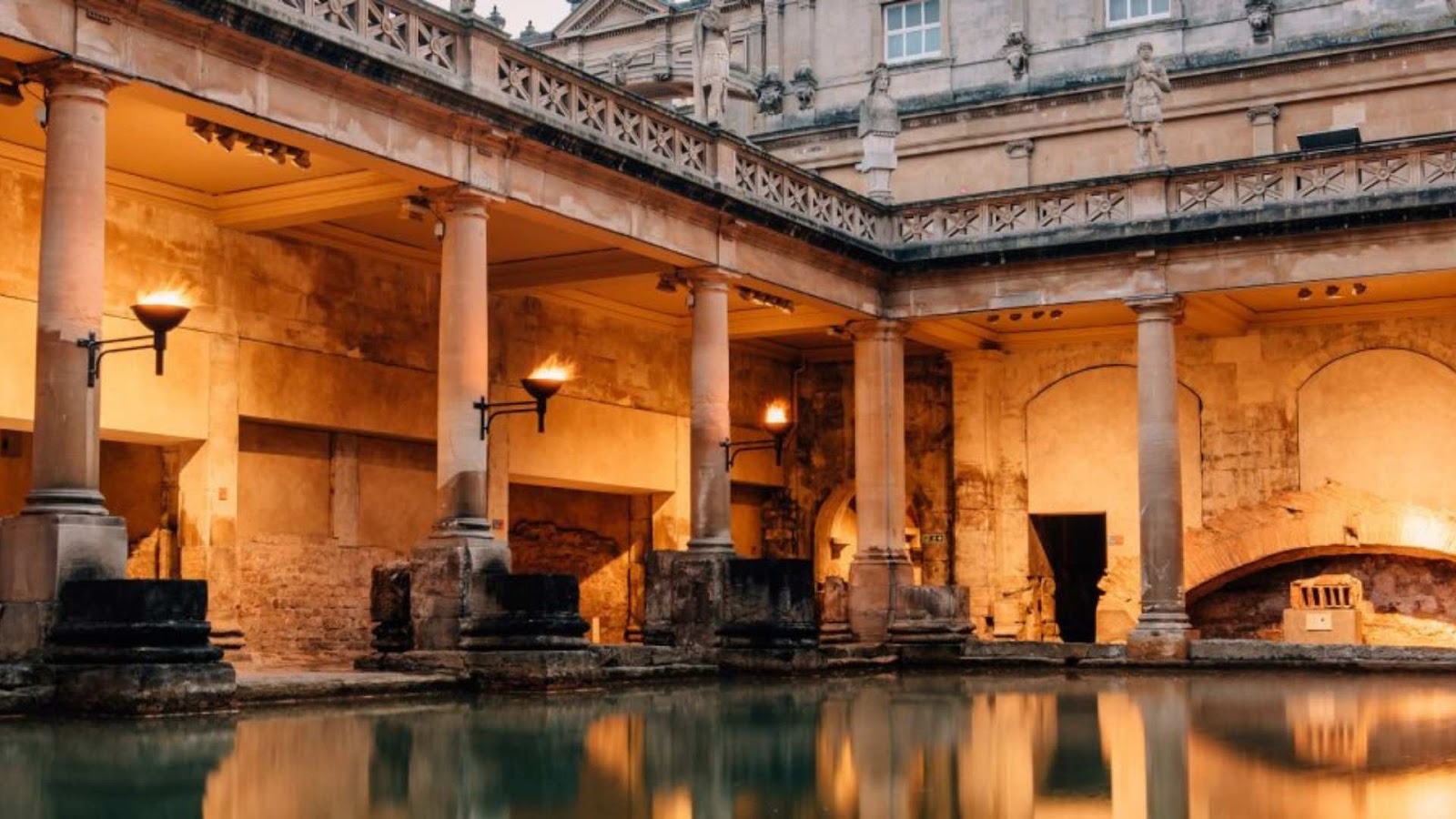
The town was founded by the Romans about 2000 years ago, when they built a temple and baths around the natural hot springs that boil and bubble among gravel deposits beneath the earth.
People still come here to bathe and restore at the rooftop Thermae Bath Spa, but it’s the Roman history of the complex that draws me back.
A recent TikTok trend offered conclusive proof that most men think about the Roman Empire at least once a week. In Bath, it takes no effort to imagine yourself in a breastplate and greaves, commanding a legion and throwing Christians to the lions.
Minerva, museums and mild humiliation
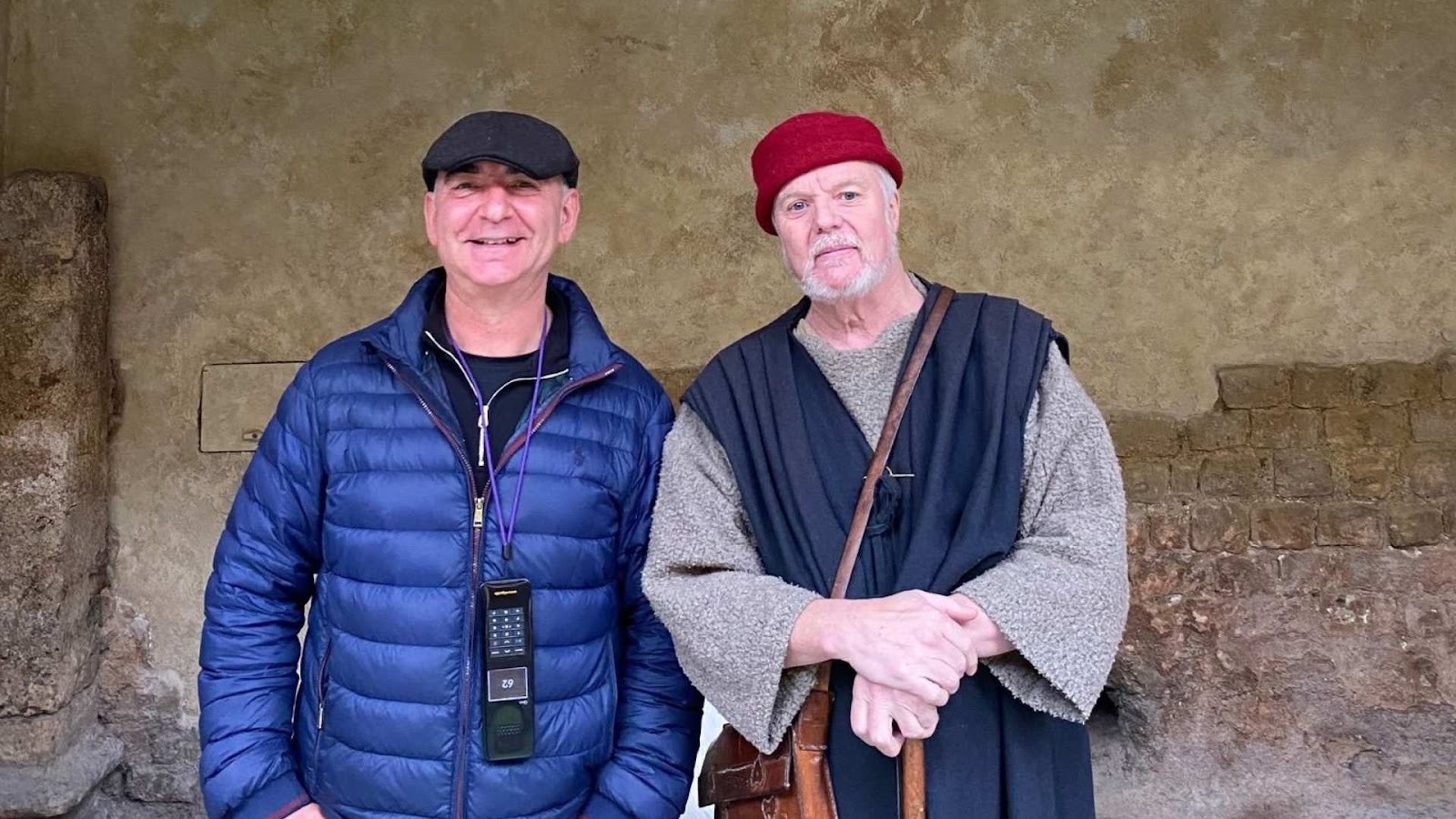
The Roman Baths and Pump Room is a wonderful museum housing the ancient bathing pool and shrine to the goddess Minerva. The visiting experience has been enhanced by actors dressed as Romans (every man’s dream part-time job) wandering around the place, waiting to be asked to appear in a photograph.
I approach a Roman Briton for a picture, which my daughter takes with my iPhone.
“I see you’ve got your slave working for you,” he says.
I assure him that, in fact, I am enslaved to her.
He smiles.
“It’s nice of you to let him out,” he tells my daughter.
Enter the Regency
For the gender that is not indecently and unreasonably obsessed with Imperium Romanum, Bath offers the most complete Regency city in England.
Among its best-known landmarks is the picture-perfect, movie-mainstay The Royal Crescent (as seen in Netflix’s Bridgerton and many other productions).
When The Royal Crescent was built in 1775 it was called simply “The Crescent”, as there were no other crescents in England. It is made up of 30 townhouses – the divisions between them are marked by chimneys – but was designed to look like a palace for its wealthy occupants.
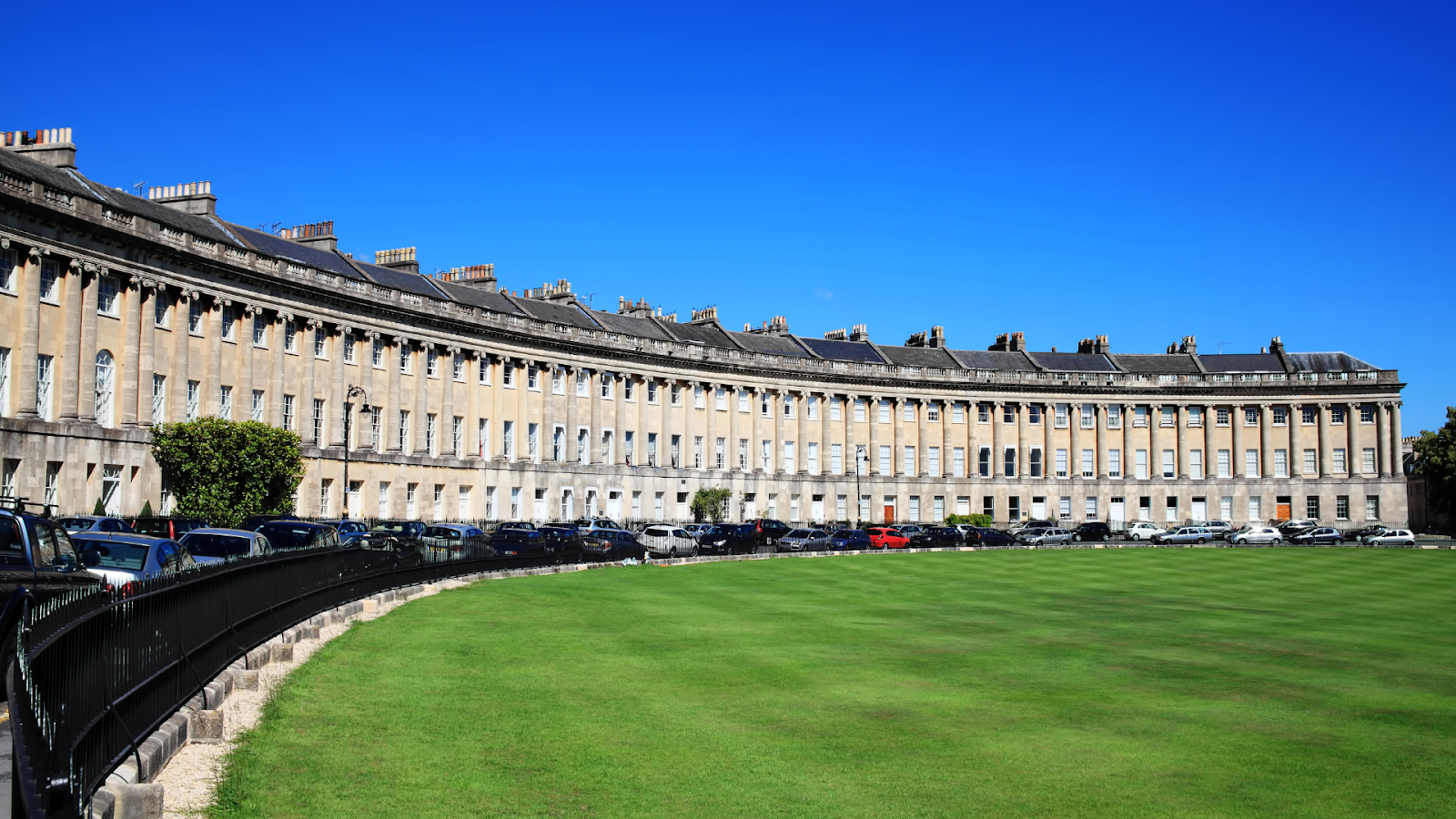
It’s still largely residential. While most of the houses have been divided into apartments, there are also eight complete private houses each with seven to ten bedrooms, and the upscale Royal Crescent Hotel.
No 1 Royal Crescent is a museum of grand Georgian life, which has never once been open while I have been in Bath.
You might have more luck if you visit without me.
Bonus tip: Take a walking tour of Bath with Fred Mawer, a wonderfully erudite guide and a Classicist who knows his Netflix.
The Bath novels. Allegedly
Jane Austen lived in Bath from 1801-1806 and mentions the city in all six of her novels, but Persuasion and Northanger Abbey are referred to as the “Bath novels”. I’m not sure why, because I haven’t read them (and neither has Rob Drewe).
A Netflix adaptation of Persuasion was filmed at The Royal Crescent, the spa and the Gravel Walk off Queens Parade Place in the summer of 2021.
In the final scene (apparently, I haven’t seen it) the heroine Anne Elliot and the hero Captain Wentworth kiss passionately on the Gravel Walk, which frankly would have been most unlikely behaviour for a 19th-century lady and gentleman.
Roundabouts and revolutions
For reasons much clearer to me than my connection with Jane Austen, I am also widely linked with roundabouts (I used to write about them; it’s a long story).
The Circus is perhaps the oldest roundabout in England, and Bath’s finest example of symmetrical, harmonious and regular Georgian Palladian architecture.

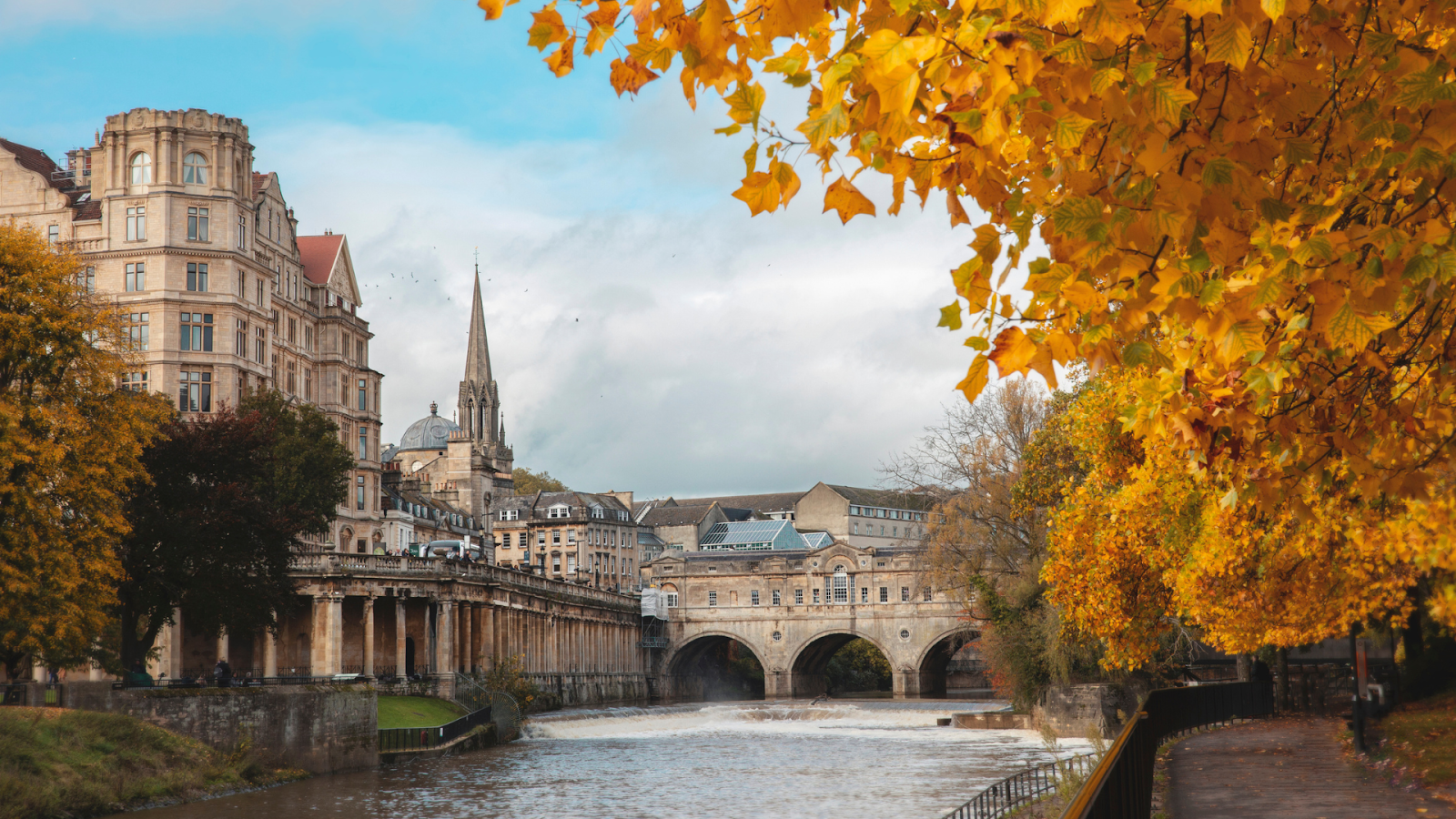
Bath’s madly cutesy 18th-century limestone Pulteney Bridge is the only bridge in England with shops built into the entire length of both sides. It looks over the weir where Russell Crowe’s character commits suicide in the movie Les Misérables, a fact which is curiously well remembered in Bath.
A break for tea and scones
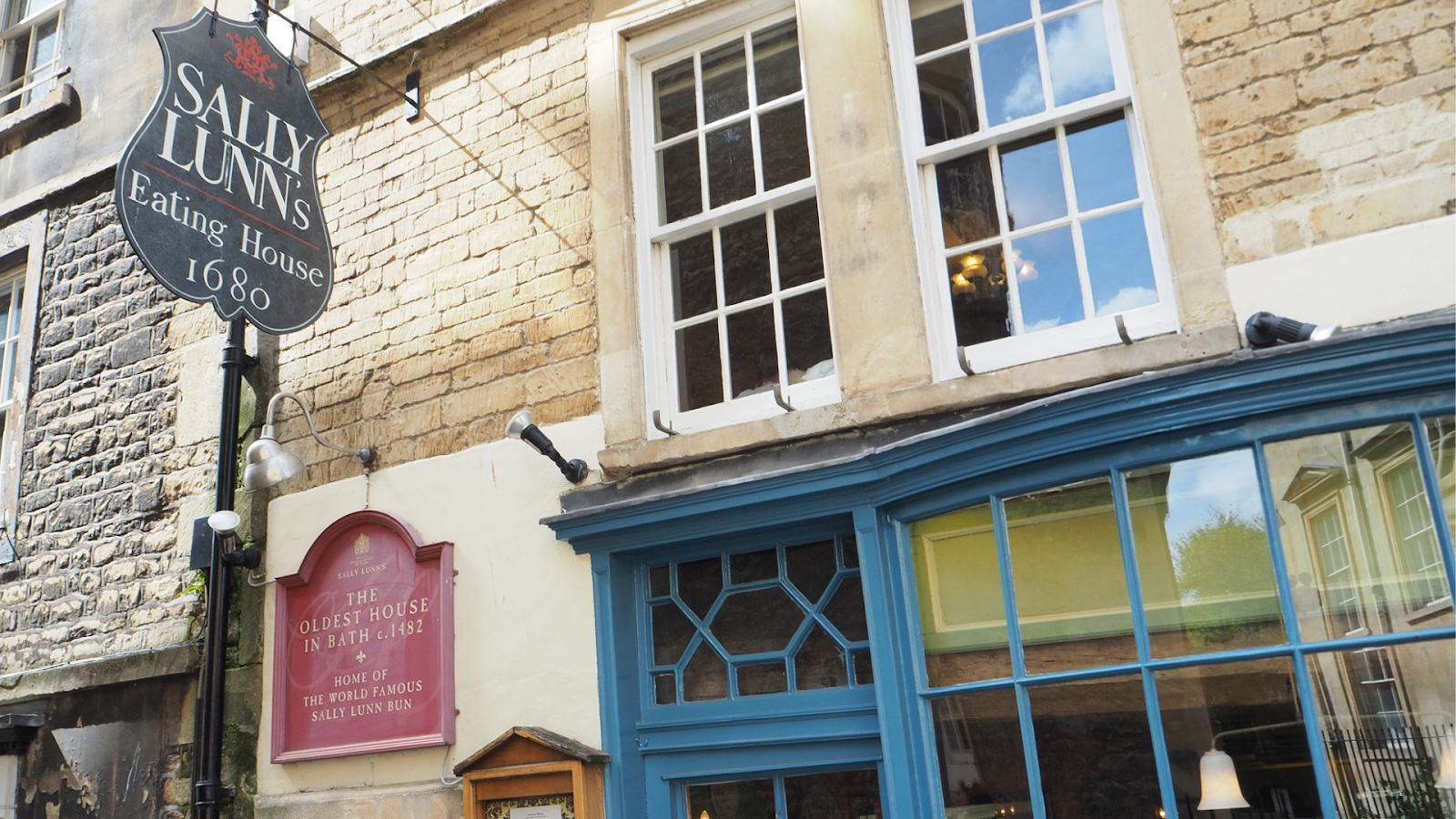
Bath is also known for its teahouses (although the pubs are pretty great, too). Sally Lunn’s Eating House, founded in 1680 in what is apparently the oldest building in Bath, now styles itself as a “museum shop”. It’s quite reasonably priced for the area, although I probably wouldn’t pay $21.50 for tea and scones anywhere else.
There are plenty of other tea shops, including The Abbey Deli (as featured in Bridgerton), Hands Georgian Tearooms and, of course, the Regency Tea Room at the Jane Austen Centre.
At last, Jane. Almost
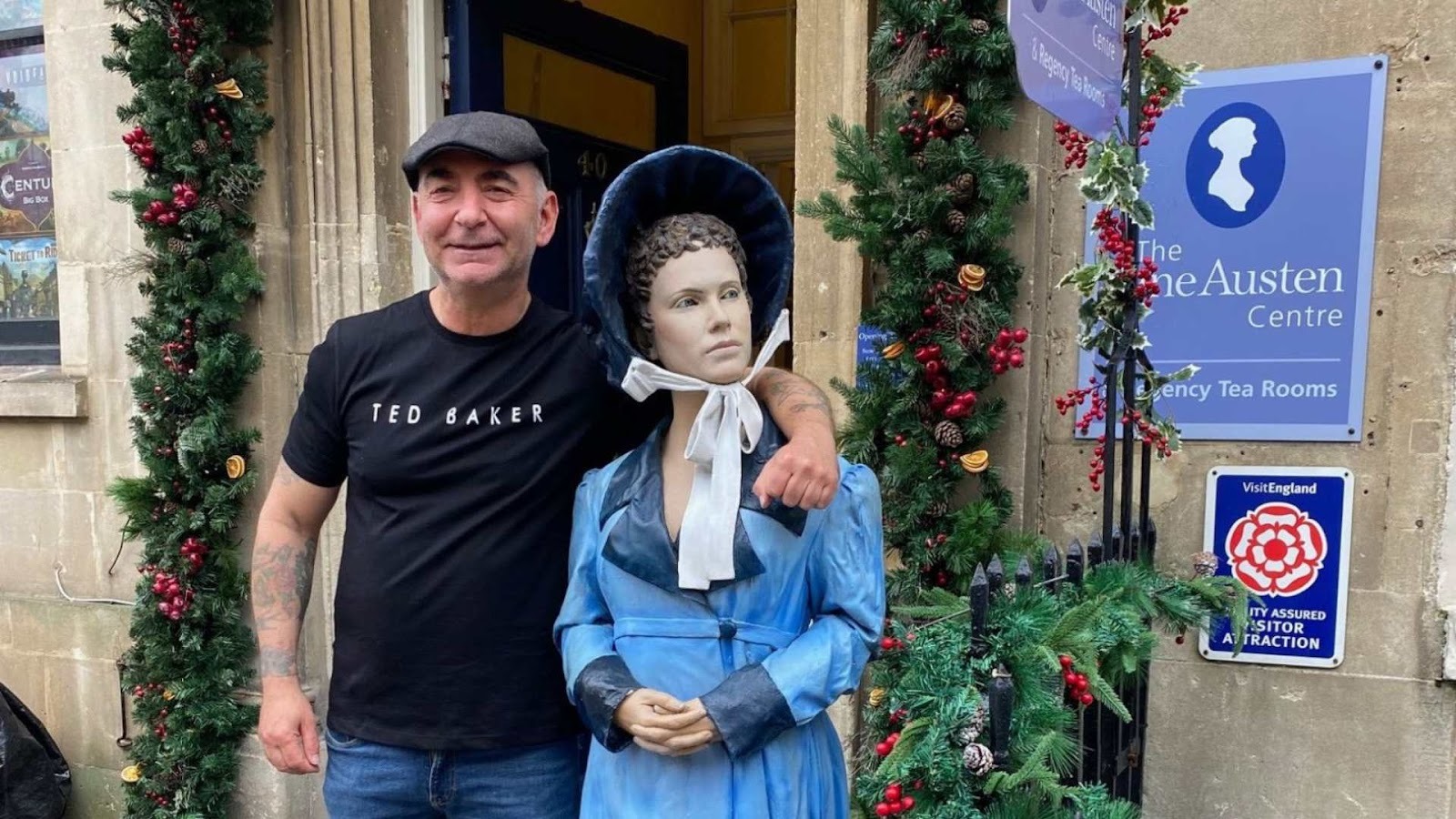
On my last morning in Bath, I thought I’d better drop in on Jane. Outside the museum, which sits in a stately terrace on Gay Street, stands a colourful statue of a well-dressed woman – it could be Jane Austen or Anne Elliot or even, at a push, Kate Bush – and an actor dressed as a footman (not many men’s dream job), whose extravagant sideburns decorate his face like mirrored maps of Italy.
The footman welcomes me, the statue ignores me, and the woman at reception tells me I can only see the building with a tour – and the next party does not leave for 25 minutes.
I don’t have a spare half hour to spend waiting so, with a heavy heart, I’m forced once again to miss the opportunity to talk sensitively about Jane Austen.
Oh well.
Feature image: Mark Dapin
Tell us in the comments: Have you ever been to Bath? Or has Mark inspired you to go there now?
More ways to travel the UK: