
Travel
Golden memories of the River of Gold

Cruising along the River of Gold from Spain to Portugal was just as magical as it sounds.
By Leonie Jarrett
My excitement was at an all-time high. I was finally going to Portugal (my first-ever visit) and, even better, I was cruising the Douro River. With a couple of bonus days in Lisbon at the start! We have already done a few different cruises that we have loved, especially our French river cruise and our action-packed Antarctica cruise.
We were beyond excited to add the Douro River cruise to our list.
What is the River of Gold?
The Douro River winds almost 900 kilometres from north central Spain to Portugal where it flows into the Atlantic Ocean at Porto. The Douro River is often known as the River of Gold. Why? There are many theories but the most common are that the name is derived from the Portuguese word for gold (“ouro”) or the Latin word for hard or strong, referencing the steep banks and rocky terrain.
The part of the Douro River we were exploring is the actual border between Portugal and Spain. We hired a pontoon boat one afternoon with a group of friends that we made on the cruise. It was bizarre being right on the border, the smartphones of the passengers sitting on one side of the boat (the Portugal side) were an hour behind the smartphones of the passengers on the other side of the boat! A quirky bonding experience for this new group of international friends.
If you’re not sure if a cruise is for you, read this first!
What is the Douro Valley?
The Douro Valley, a UNESCO World Heritage site, is the oldest demarcated wine region in the world (1756). That means, it’s the only place legally allowed to produce Port wine.
The climate is very dry as the mountains tend to block the rain clouds. The Port wine grapes are not allowed to be irrigated (they produce more sugar this way). The grapes are smallish and harvested around September by hand as machinery cannot access the steep terraces. The flavour, quality and aroma of the Port wine come from a unique combination of the rocky, acidic soil, the warm, sunny climate and the sweet grapes.
For wine fans after something a little closer to home, read about my trip to the Hunter Valley.
Portuguese custard tarts and tiles in Lisbon
The Viking “River of Gold” itinerary started in the capital city of Portugal, Lisbon. Our group had a full day here which is nowhere near enough (add on some days if you can) but at least it gave my husband and I a taste of the city.
We started with an included tour in Belém. The star attraction for the morning tour was the Maritime Museum where we spent time learning about the fearless Portuguese maritime explorers.
Left to our own devices for the afternoon, we first wandered to the nearby Pastelaria de Belém and tasted a warm Pastel de Nata. These little egg custard pastries are an international symbol of Portugal and we tried a few more over the coming days. Complete with a dusting of cinnamon, they are divine!
In the afternoon, we wandered the hilly streets of Lisbon and vowed to return when it wasn’t quite so humid! We saw our first examples of Portuguese tiles here (“azulejos”). Often blue and white, they are everywhere, decorating complete facades of buildings as well as floors, walls and ceilings.
Breathtaking views in Porto
The itinerary ended in Porto. Once again, we had a whole day there and we needed more. One was a start though and it was enough to make us want to return.
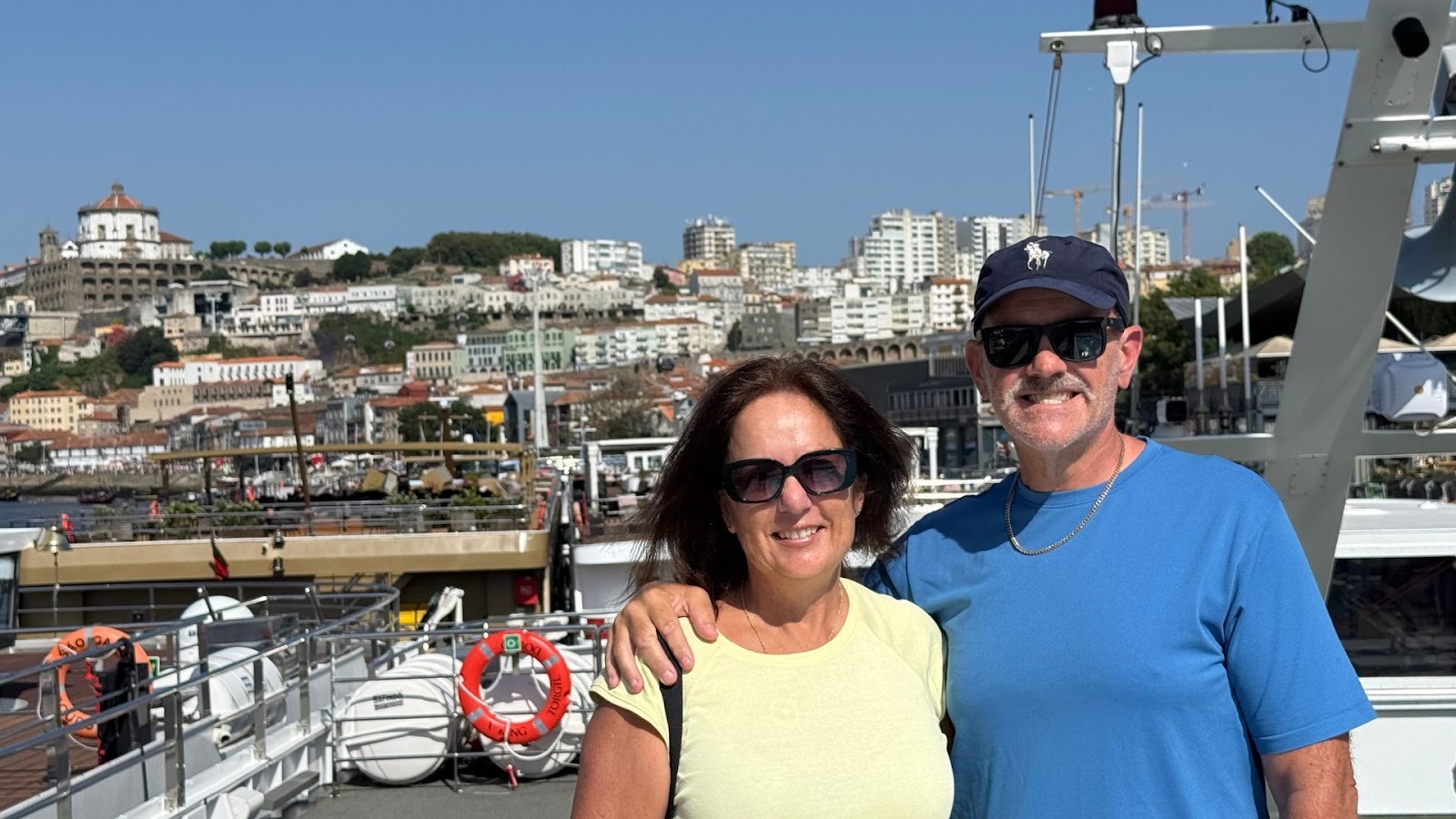
For me, the highlights of Porto were the views. Porto is actually the town on one side of the Douro River. The other side is called Vila Nova de Gaia. Vila Nova de Gaia is the side where the ships dock and the majority of the locals live. The views of both towns from the Viking Torgil were spectacular. So, too, the views from Graham’s Port Terrace on the Gaia side, from the cable car (also on the Gaia side) and from the striking Dom Luis I metal bridge as you cross from Gaia to Porto or vice versa.
The iron arch-shaped Dom Luis I bridge has two levels – the higher level for the train and pedestrians and the lower level for the cars and pedestrians. We crossed over on the higher level where it meets the cable car and back across the lower level where we then walked back to our ship along the river. No matter which way you take them in, there are views to die for!
Love a walking holiday? Try these gems.
Taste the Viking Hospitality
We opted for Viking cruises this trip and were so glad we did. Viking hospitality starts when Viking picks you up at the airport and whisks your luggage away, telling you to concentrate on nothing else but relaxing and enjoying your holiday.
They simply take care of everything. If you have free time in a port, they give you a map. If there is a pre-arranged meeting time, that is marked on the map too. The excursions are planned to the nth detail including “comfort” stops. Nothing is left to chance.
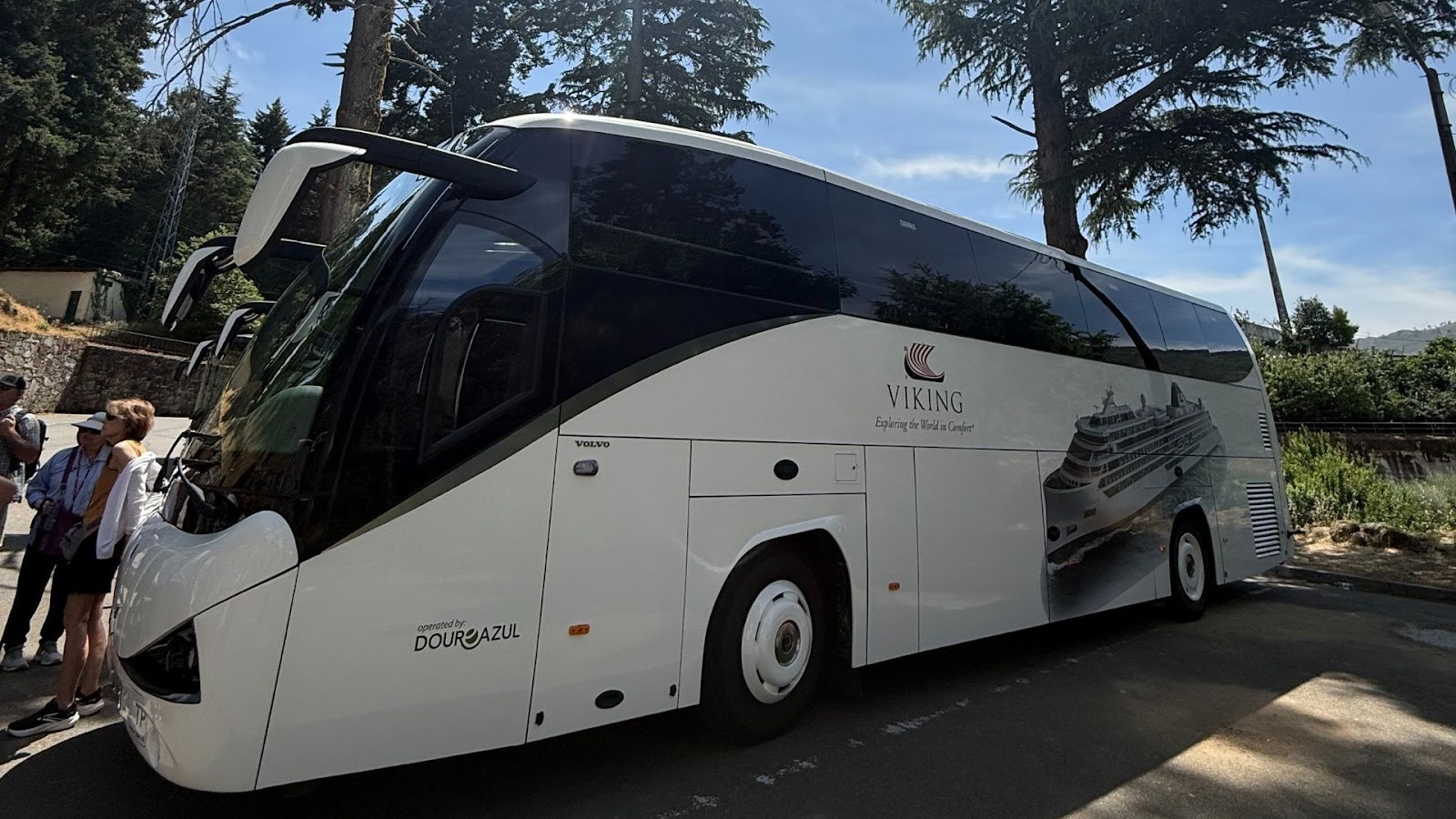
Fully branded buses ferry passengers on the excursions. There are seatbelts, individual climate control, WiFi, water and a toilet onboard in addition to the ever-present tour guide. Ours was Helena and she was excellent – a fountain of knowledge and enthusiasm.
We have been on other river cruises where the ship is your floating hotel but we have toured independently during the day. This wasn’t the case on this itinerary, as some of the ports are really only docking stations for the buses to leave from.
Viking organises one included tour a day. It is up to you whether you join the tour or not but, if you do, it is complimentary. There are also optional, paid excursions. There is nothing much to do at some of the Douro Valley ports so the tours are important.
There is a bit of scenic sailing on this route too, as boats are not allowed to sail at night. I loved the scenic sailing and not just for the rest it afforded!! The scenery through the Douro Valley is incredible. The river bends continuously so you never know what’s around the corner. There is a bit of river boat traffic but nothing really else so it is very peaceful and serene.
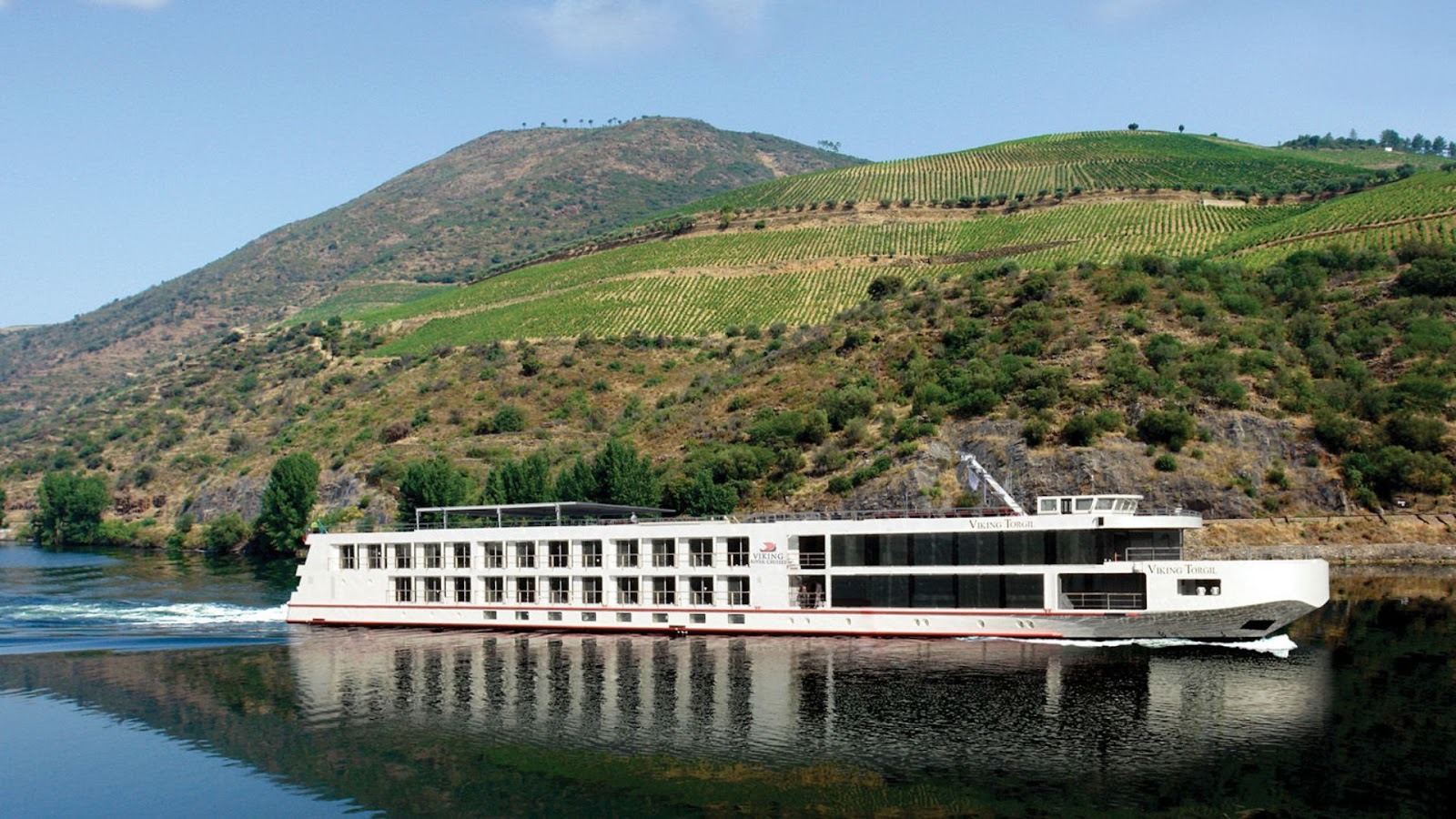
For kilometres and kilometres, there are steep, stone terraces. Mainly of grapes but some olives and almonds too. There’s the odd farmhouse and “Quinta” sign (meaning a country vineyard estate) but the overwhelming sight is terraces of vines. Layers and layers of green. It is breathtaking.
Our favourite excursion
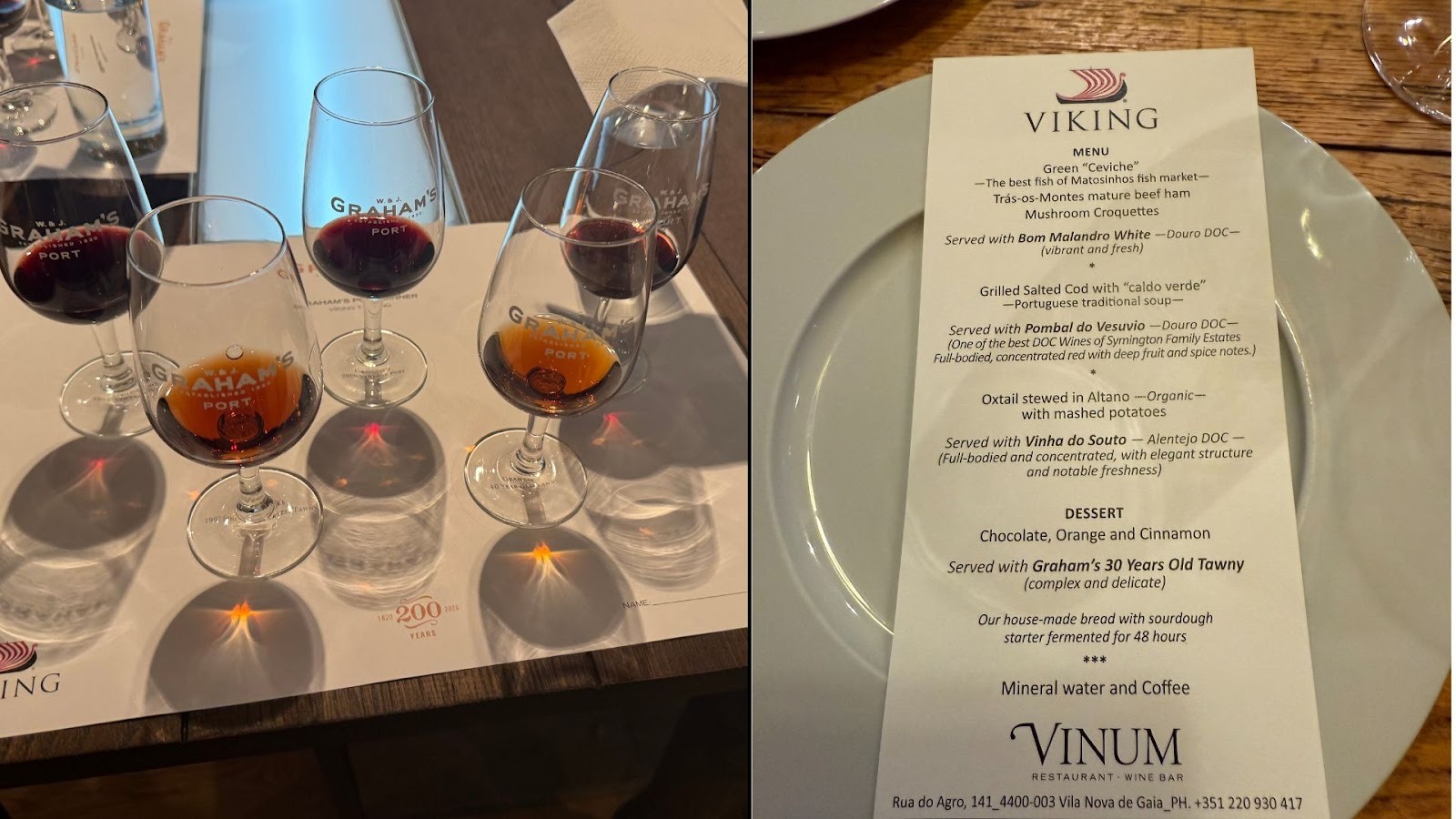
We chose an optional dinner excursion in Vila Nova de Gaia at Graham’s Port. The evening started with an explanation about the history of Port wine and of Graham’s followed by a tour of the cellars, a Port tonic on the expansive terrace with views over Porto and then an incredible tasting dinner with paired wines. There were only six of us on this excursion which was on the first night of the cruise portion of the itinerary - so we made fast friends!
Fabulous food and drink
Breakfast is a buffet with a selection of cook-to-order dishes such as eggs and French toast. Lunch and dinner are à la carte with Always Available Classics available every day, daily specials and also daily changing regional specialties.
The food, led by English Executive Chef Michael, was top-notch and there were plenty of tasty choices every day.
Soft drink, wine and beer are available with meals. Specialty coffees and tea are available all day (cookies too!) at a self-service station. We had the Silver Spirits Beverage Package so we had premium wines and spirits and these were available outside mealtimes. The service was friendly and our glasses were never empty. Cheers!
Our home away from home – the Viking Torgil
The Viking Torgil (2014) is a “baby” Longship at just under 80 metres in length. It is one of five, identical sister ships that sail the Douro.
The ship is modern with copious panoramic windows for light and views. There are 53 Staterooms with capacity for 106 passengers. On our sailing, there were 98 passengers and 35 crew.
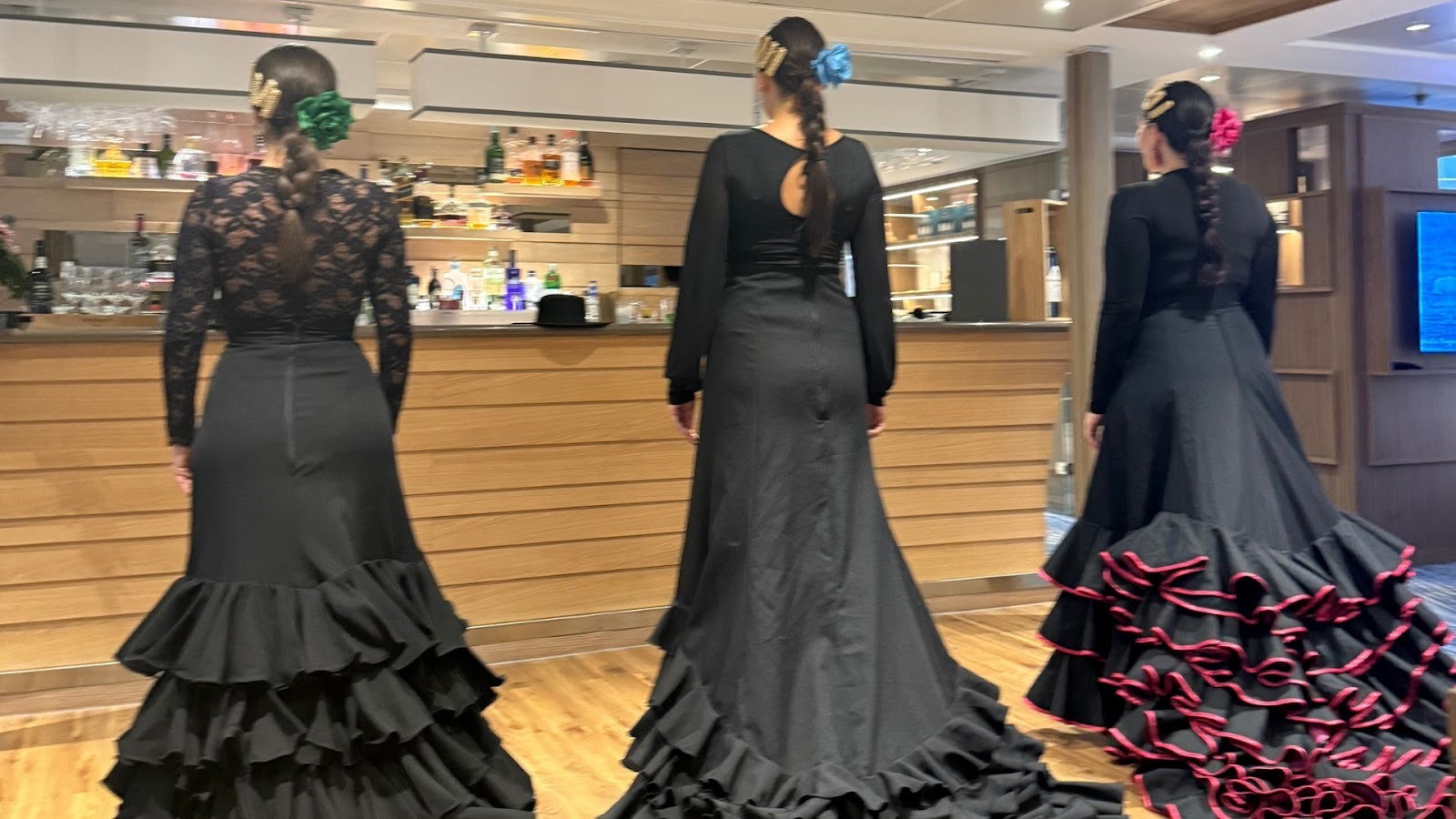
Since it’s a “baby” Longship, there is no gym, no spa, no laundrette. Basically, there’s the staterooms, a Lounge (indoor and outdoor), a Restaurant and a Sun Deck with pool. There was always somewhere to sit in the Lounge or on the Sun Deck and there were plenty of sun lounges too.
Our elegant, Scandi cabin
We had a Veranda Stateroom (17 square metres). Elegant, Scandi, minimalist design with blonde colours evoking a connection to nature.
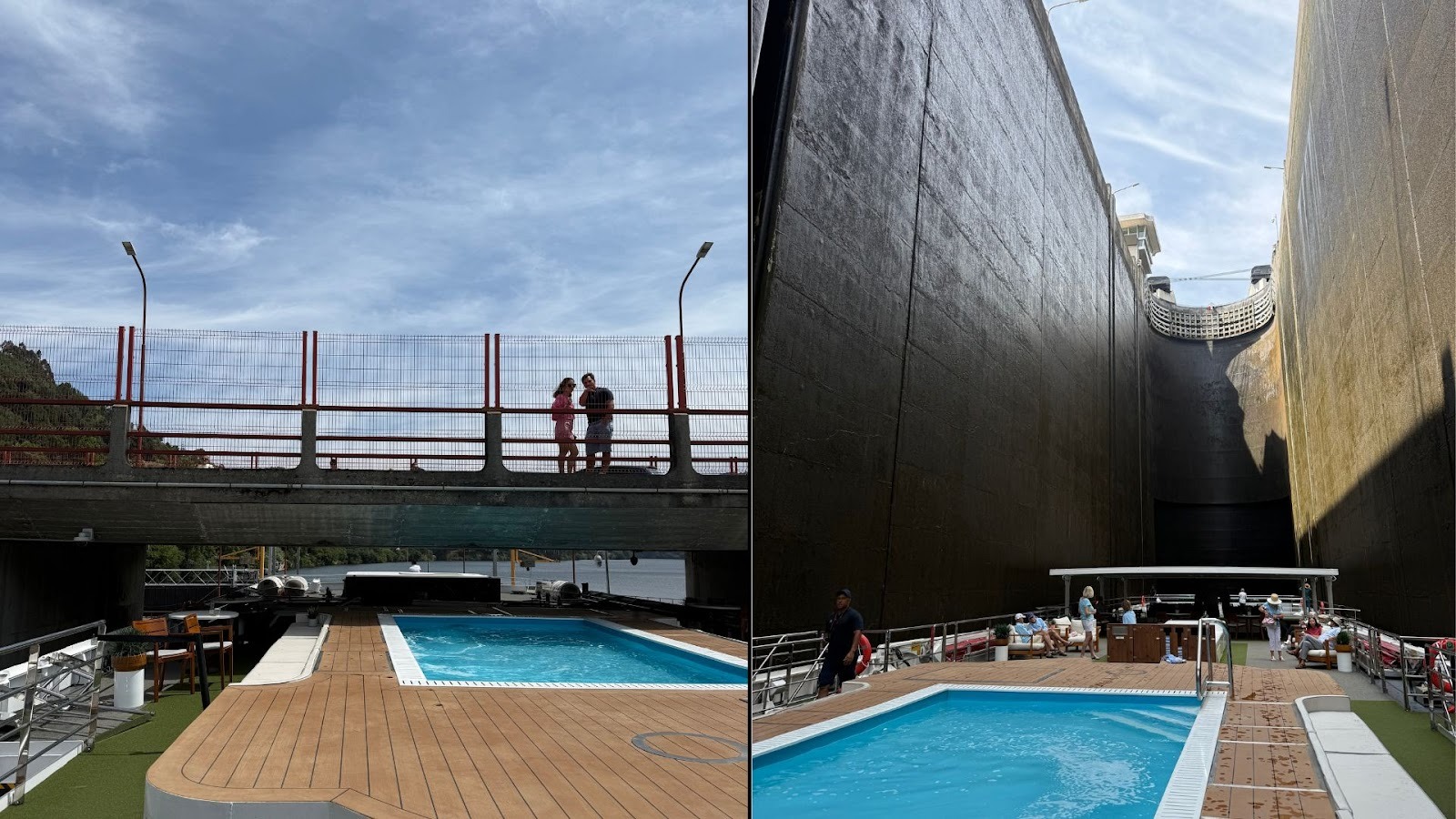
We had a proper balcony with a floor-to-ceiling sliding glass door; not just a window that folded down. The balcony is small as the width of the ship is capped due to the locks in the Douro. There are five locks in this section of the Douro – you enjoy them each twice, once on the journey to Barca d’Alva and once on the way back to Porto. One of the locks is the biggest in Europe at 35 metres deep.
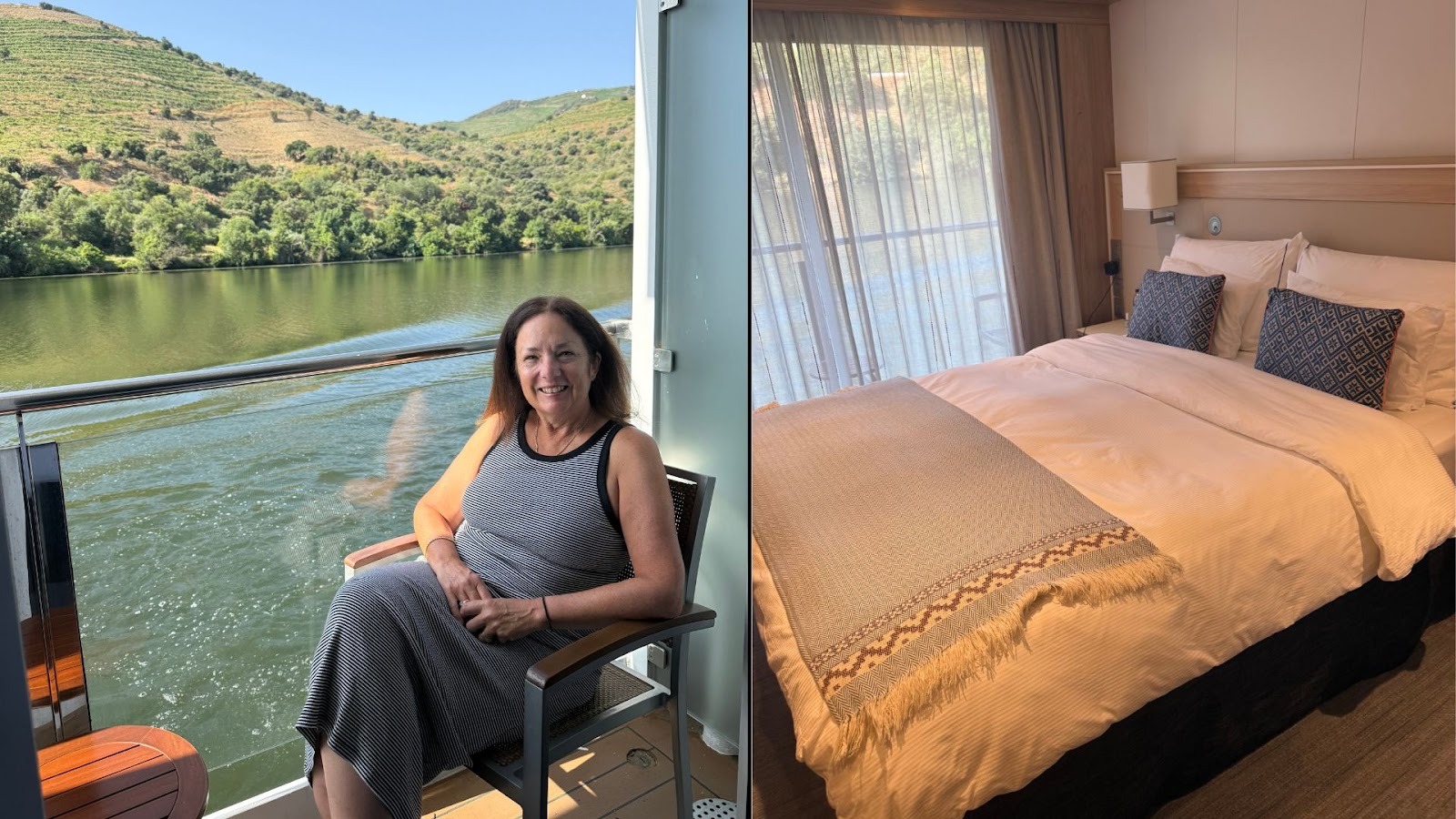
The Stateroom had loads of storage, a comfortable QS bed, bar fridge, safe, TV…everything that you would expect or need. Our favourite innovation was the electric blackout blind. The ensuite was compact but stylish and the sliding door was space-saving genius.
Farewell to the River of Gold
After a week of sailing, it was sadly time to leave the Viking Torgil and to farewell our new friends.
I joined a Portuguese language lesson onboard. To use my brand-new Portuguese skills, this is not Adeus (goodbye); just Até logo (see you later).
The writer sailed “Portugal’s River of Gold” itinerary as a guest of Viking Cruises. Some images are courtesy of Viking and some images are personal.
Feature image: courtesy of Viking
Tell us in the comments: Do you love cruising?
Articles we think you’ll love: