
Health
Lost your keys? Why spatial memory fades first (and how to protect it)
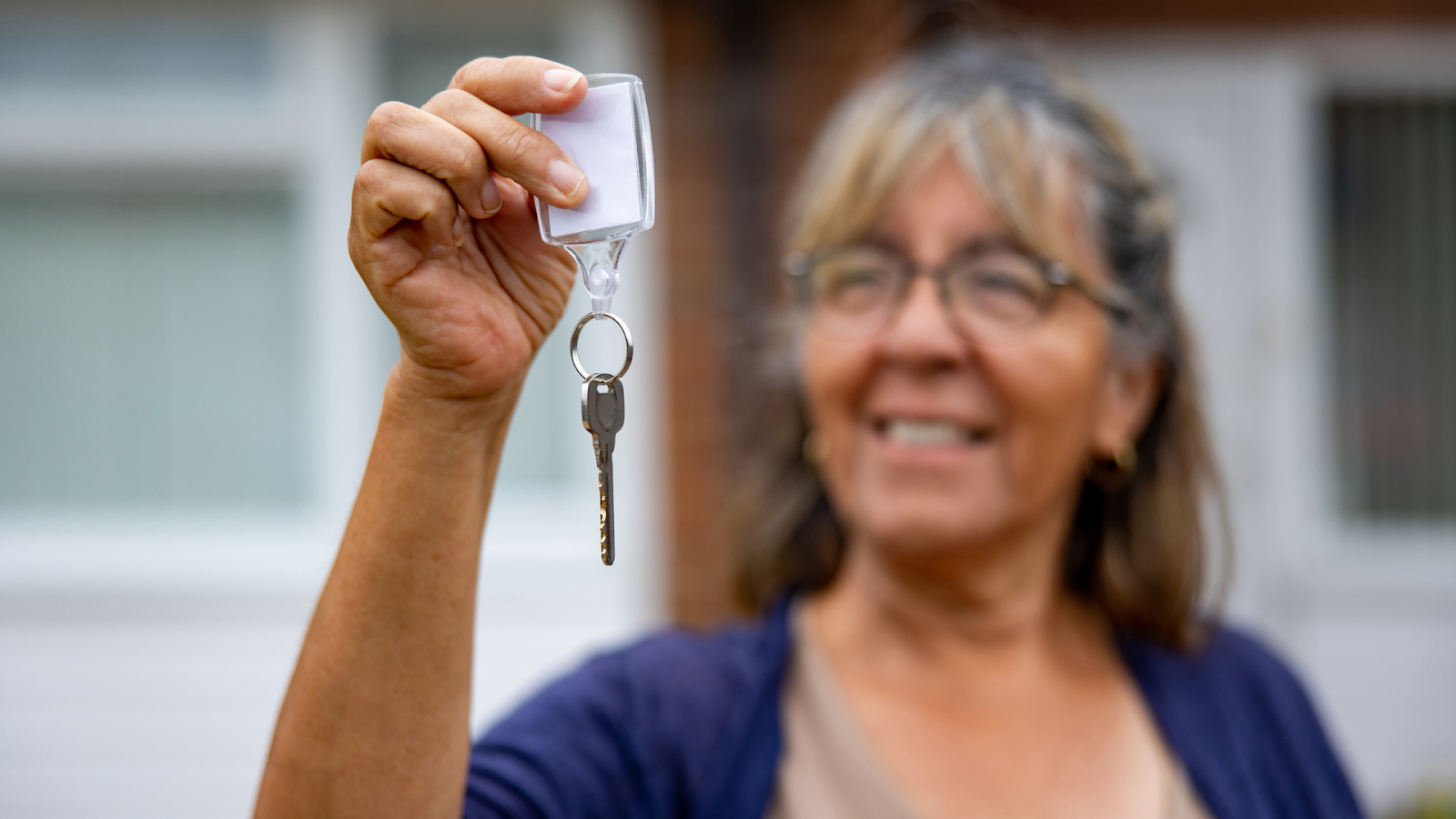
Forgetting everyday things like where you put your keys can feel alarming, but early changes in spatial memory are a normal part of ageing. With the right habits, you can strengthen your brain’s internal GPS.
By Carolyn Tate
Ever wander around your local shopping centre car park, certain your car was to the left of the entrance but now not so sure? Or maybe you’ve been about to leave the house but suddenly clueless on where you put your car keys? Again.
Take heart; it’s not just you, and it’s not your fault.
There's a reason these moments happen more as we get older and there’s no need to leap straight to assumptions of dementia. A new study from Stanford Medicine has found that our ability to remember locations and navigate spaces is one of the first mental skills to start to decline – and it's all down to our brain's internal GPS going a bit fuzzy. It’s not great, but it’s not all doom and gloom. It doesn't happen to everyone equally, and there’s plenty we can do to either stop it or seriously slow it down.
What's actually happening when we forget where we parked
Deep in your brain, there's a region called the medial entorhinal cortex (don’t worry, you don’t need to remember that term). "You can think of the medial entorhinal cortex as containing all the components you need to build a map of space," explains Professor Lisa Giocomo, who led the Stanford research. This area works with its neighbour, the hippocampus, to create mental maps of where we are and how to get from A to B.
The Stanford team studied mice at different life stages – roughly equivalent to human 20-year-olds, 50-year-olds, and 75 to 90-year-olds. The younger mice could easily switch between remembering reward locations in two different virtual environments. The elderly mice got a bit more confused and couldn't work out which track they were on.
"Their spatial recall and their rapid discrimination of these two environments was really impaired," says lead author Dr Charlotte Herber.
We might not be mice, but it’s the same for us. "Older people often can navigate familiar spaces, like their home or the neighbourhood they've always lived in, but it's really hard for them to learn to navigate a new place, even with experience," Giocomo says.
But here's where we get encouraging: one elderly mouse aced the test, remembering locations just as well as the youngsters. This hero "super-ager" had brain activity that was unusually sprightly, which suggests some of us may be naturally resistant to cognitive ageing.
Super-agers: What we can learn from octogenarians who defy cognitive decline
There's another factor too, says mental resilience expert Gary Fahey. "If you parked the car while distracted, stressed, or scrolling your phone, the brain may have never properly 'saved' the memory in the first place. In those cases, it's less about losing a memory and more about never fully laying it down."
When to worry (and when not to)
So how do you know if your occasional navigational hiccup is normal or something you might want to mention to your GP?
"Normal ageing usually means it may take you a bit longer to get your bearings sometimes, occasionally walk past a turn, or momentarily forget where you parked in a big shopping centre – but you can retrace your steps and problem-solve your way out," Fahey says. "These happen infrequently, don't get dramatically worse over time and don't stop you living independently."
Warning signs are different though. "They include getting lost on very familiar routes, repeatedly being unable to find your way home or to places you visit often, struggling to follow simple directions, or needing to rely on others far more than before. When changes are noticeable to family or friends, are getting progressively worse, or come with other issues like difficulty managing money, language changes, or major mood or personality shifts, it's time to see a GP for a proper cognitive check-up."
The key word to latch onto there is "progressively". We all have off days. It's the pattern over time that matters.

The Google Maps question
We’ve all wondered: Does relying on GPS actually make our spatial memory worse? The answer is: yes, probably. But it's not as simple as ditching your phone.
"There's growing evidence that heavy reliance on GPS can weaken our natural way-finding skills," Fahey says. Studies show that people who use GPS constantly have poorer spatial memory when they need to navigate without it.
"In a lot of sense, spatial awareness can be treated as a skill. It's probably less about it getting worse and more about it being less trained or practised."
So what's the solution? Don't hand over all your navigation to technology. "A simple approach is to use GPS to plan the route, then switch it off and try to get there using landmarks and your own sense of direction, especially in familiar areas. Or, after a few times going to the same place with GPS, try doing so without it."
Think of it like this: GPS is a great tool when you need it, but your brain needs practice too.
How to protect your brain's GPS
The Stanford team found 61 genes that were more expressed in mice with unstable spatial memory. One of them contributes to networks that might help shore up stability. While we can't change our genes, we can definitely influence how our brains age.
"The best things you can do for spatial memory are the same things that protect brain health in general – move your body, challenge your mind, and look after your heart," Fahey says. "Regular physical activity, particularly walking, balance work and aerobic exercise, has been shown to improve memory and support brain regions involved in navigation."
But don't stop at general exercise. "Deliberately practice the 'skills' you want to improve. Take new routes on your walks, try to visualise a 'bird's-eye' map of your neighbourhood, use a paper map occasionally, or take up activities like bushwalking, orienteering or even exploring new suburbs on foot. Pay attention to landmarks, street names and directions instead of just following the blue line on your phone."
Hold that thought: try these simple strategies to improve your memory
The other brain-health basics matter too: good sleep, managing blood pressure and cholesterol, and staying socially connected. It all adds up.
Can we get it back?
Here's the really hopeful part: in many cases, yes, you can get your spatial memory back – at least partially.
"Some changes in spatial memory are due to disuse, stress, poor sleep, low mood, or medication effects, and these can often be improved," Fahey says. "The brain remains plastic across the lifespan, and studies show that targeted navigation training and combined physical–cognitive programs can improve spatial skills and even help preserve hippocampal structure."
Even if the improvements are small at first, they're happening, and they’re important. And if there's an underlying condition like mild cognitive impairment, the right activities can help slow the decline.
Fahey recommends everyone get a baseline cognitive check-up with their GP, whatever your age. A brief test takes around 10 minutes and gives you a useful reference point for spotting any future changes.
His parting advice is to go easy and practise self compassion. "I'd also encourage people to be kind to themselves,” he says. “It's easy to worry you're 'losing your mind' when it takes a bit longer to find your car, but often the issue isn't a 'bad memory' – it's that you were distracted and didn't properly pay attention when you parked. Notice these moments, but also remind yourself of where your memory does work well – remembering birthdays, favourite foods, or the details that matter to you and your loved ones."
So the next time you lose your keys or find yourself wandering around a Westfield carpark, take a breath, retrace your steps, and try to be more present next time. Your brain will thank you for it.
Feature image: iStock/andresr
The information on this page is general information and should not be used to diagnose or treat a health problem or disease. Do not use the information found on this page as a substitute for professional health care advice. Any information you find on this page or on external sites which are linked to on this page should be verified with your professional health care provider.
Tell us in the comments: Go on, how often do you lose your car keys?

More on staying sharp: