
Lifestyle
‘Who do I think I am?’ How ancestry became Karen’s favourite obsession
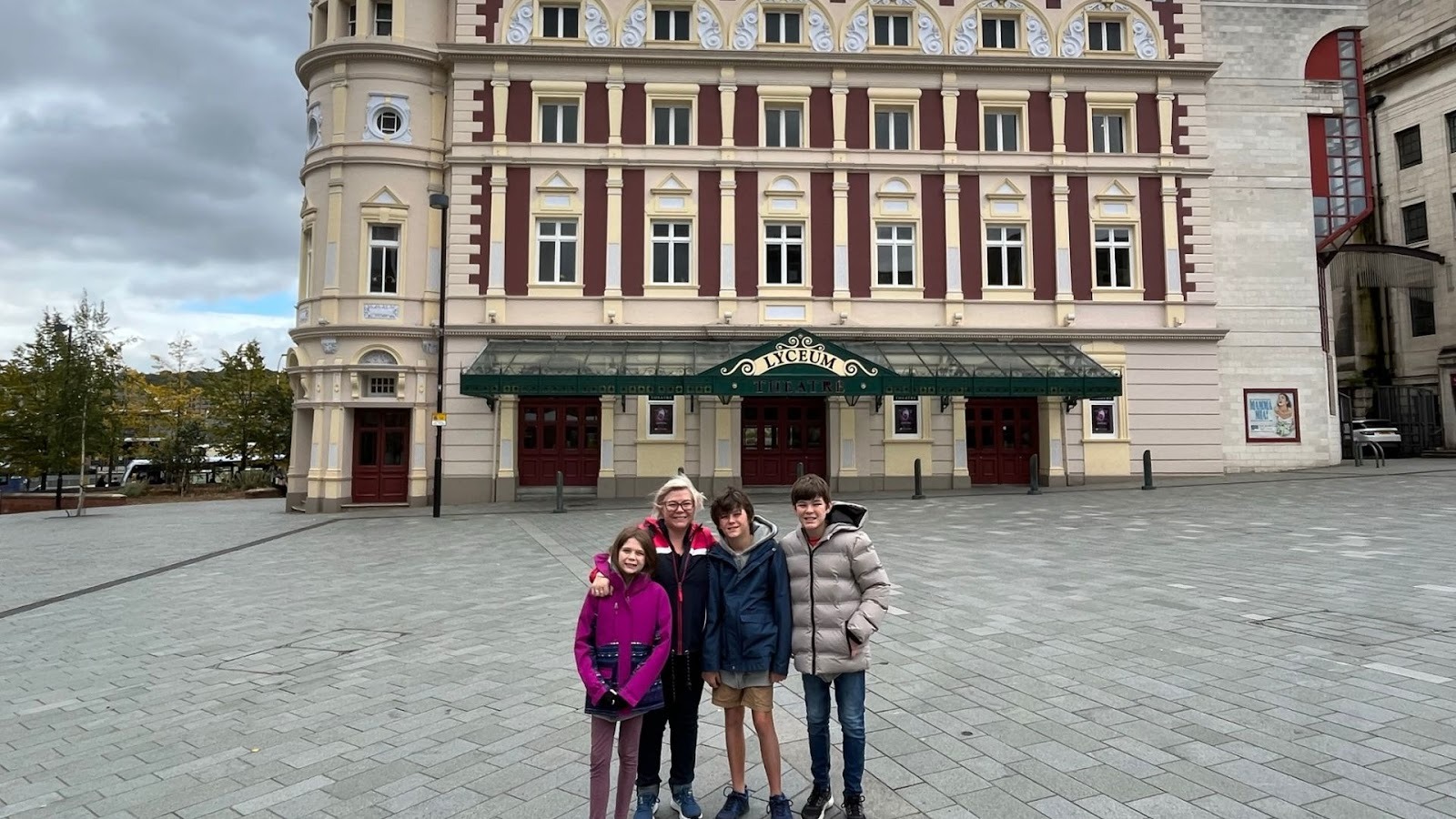
Karen never would have guessed that some light research about her ancestry would turn into a trip to Sheffield to discover more about her roots.
By Karen Bleakley
It began with a friend. She was hooked on tracing her family tree, spending hours poring over old records, and asking me to decipher the flouncy handwriting in census documents.
I didn’t think the hobby sounded that exciting. Knowing people’s names and milestone dates didn’t sound worthwhile without someone to fill in the blanks of their life story. It felt like history, but with the juiciest parts missing.
Curiosity has a way of sneaking up on you. Before I knew it, I’d found myself signing up for a free weekend on Findmypast, followed by a trial of Ancestry. I assumed I’d easily be able to pencil a lot into my family tree. I thought it would be quick and easy. I thought it would be a hobby I could pick up and put down again. I was wrong on all counts.
Nobody warns you, but tracing your family tree can become addictive. That first weekend, I stayed in bed with my laptop, ignoring the pleading eyes of our dog and barely moving to gather food or drink. My kids were neglected. Laundry piles were ignored. I was deep in searches, following tiny threads that led to bigger and bigger questions.
Decoding the past isn’t easy
I quickly realised that it wasn’t always obvious who was who. I had no idea that families often gave cousins the same name even when they were born in the same year. Figuring out which person matched which record was a lot harder than it looked – and one wrong turn can mean you’re building out the wrong line. Then there were people having babies out of wedlock, where it was difficult to identify the father, or mothers who lied about being widowed in census data to hide the fact that the baby’s dad wasn’t in the picture.
Love history? Check out Australia’s top 12 historical sites
Once I started digging, I discovered that these weren’t just names and dates on a screen. These long-dead relatives began to feel real. They were people who had lived, worked, struggled and loved. People whose choices, circumstances and experiences had, in small and intricate ways, led to me. And suddenly I couldn’t stop.
From online to reality
Soon, my search for ancestors moved from online research to the real world. On a trip to the UK, I planned time in Sheffield, where my family had lived for generations. I wanted to walk in their footsteps. I was born there myself, and although I’d grown up in another city, I’d moved back there for half of my twenties. But despite living there – and knowing my family came from there – I’d never immersed myself in my family’s local history or given any real thought to how my parents and their parents and their parents’ parents had lived.
I wanted to see the streets where my family had walked, the places where they had laughed and worked and the sites that had shaped their lives. I even wanted to see the difficult places, like the workhouse where my grandad grew up, and the factories where a distant great-great-grandparent had worked in Sheffield’s famous cutlery industry.
Dive deeper into your family’s history
We visited the cathedral where members of my family had been married and walked through the cemetery where so many of my relatives had been laid to rest. Many of their graves were unmarked, but with the help of cemetery maps, I stood beside where they were buried and took photos of the unmarked patches of grass.
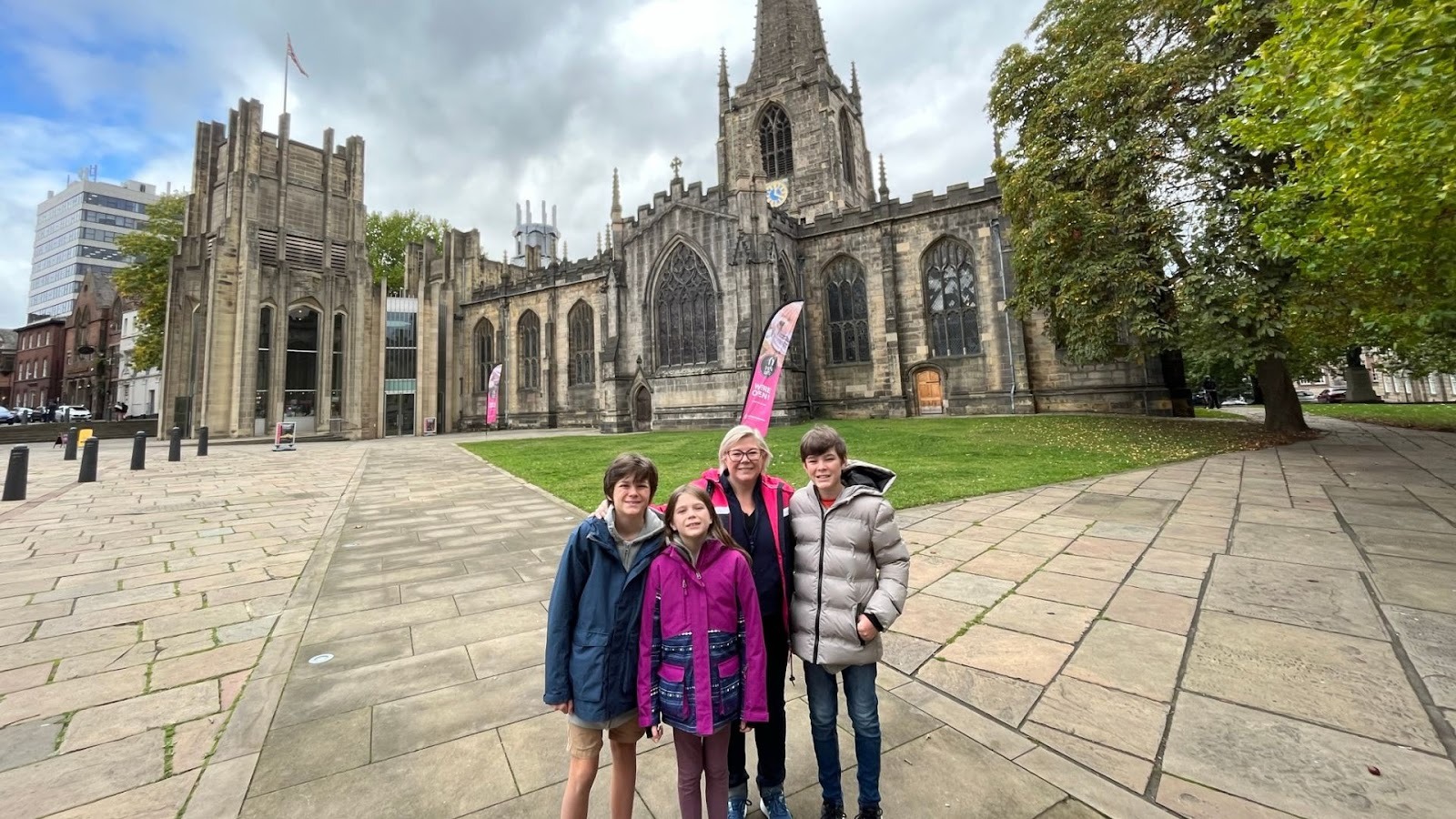
Even though the city has changed beyond recognition, there was something special about being there and imagining the lives of the people who came before.
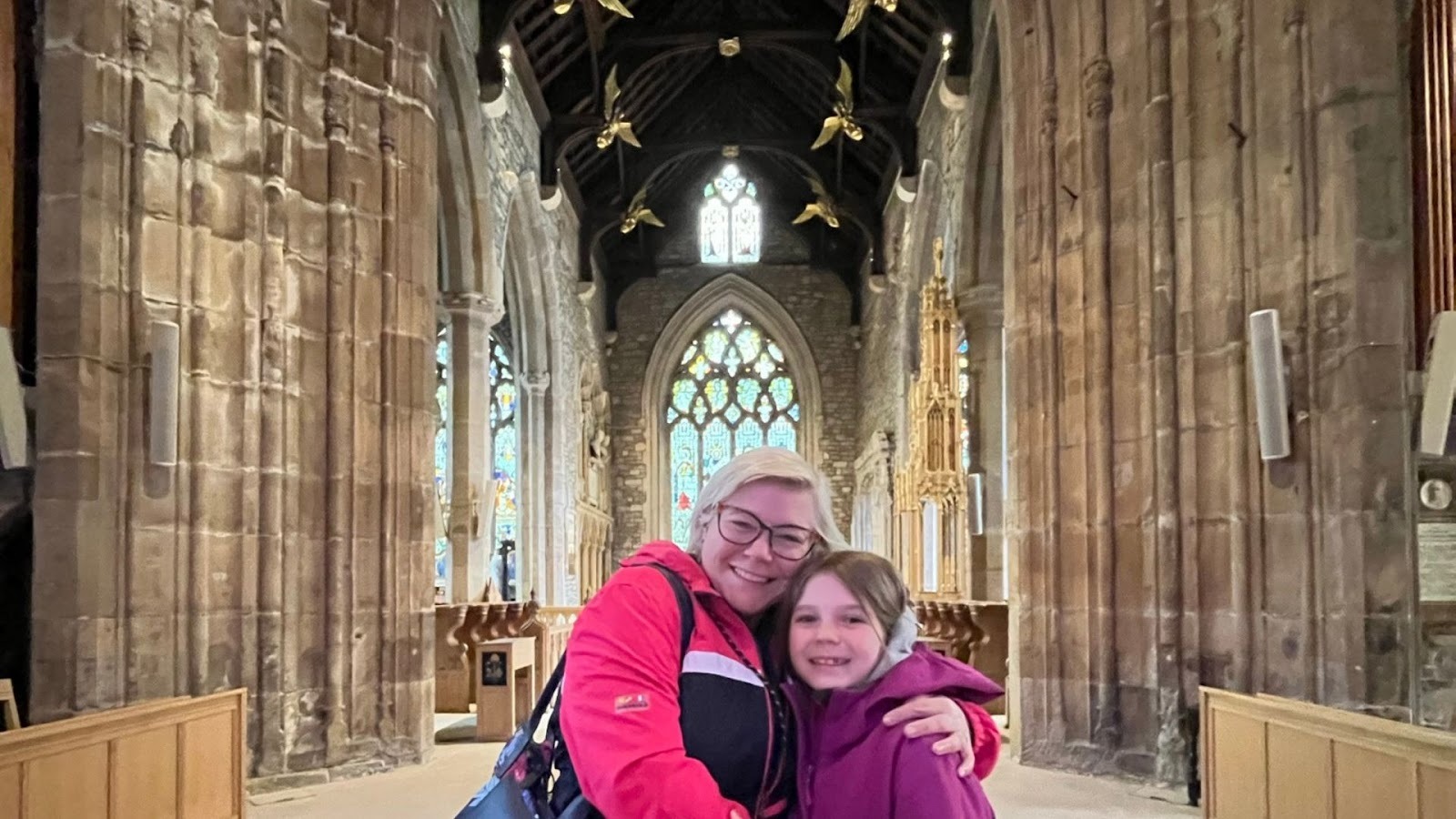
Uncovering my grandad’s past
One of the most emotional discoveries has been unravelling the story of my grandad. He had told my dad he was orphaned as a child, but the records revealed something else. At the age of five, he was placed in a workhouse along with two older brothers following the death of their father. A younger brother stayed at home, as he was likely too young to be sent away.
It was heartbreaking to read about the harsh realities he faced and learn about a childhood shaped by loss, separation and trauma. (Spoiler: Once you discover these things, you can’t help but go down the side quest of researching the workhouse conditions. It’s like a never-ending hobby where there are always new things to uncover.)
I’ve tried to trace what happened to my grandad’s workhouse brothers. I know from my dad that my grandad escaped by lying about his age and joining the army when he was a teenager. But many records were destroyed during the war and the trail goes cold beyond the workhouse walls.
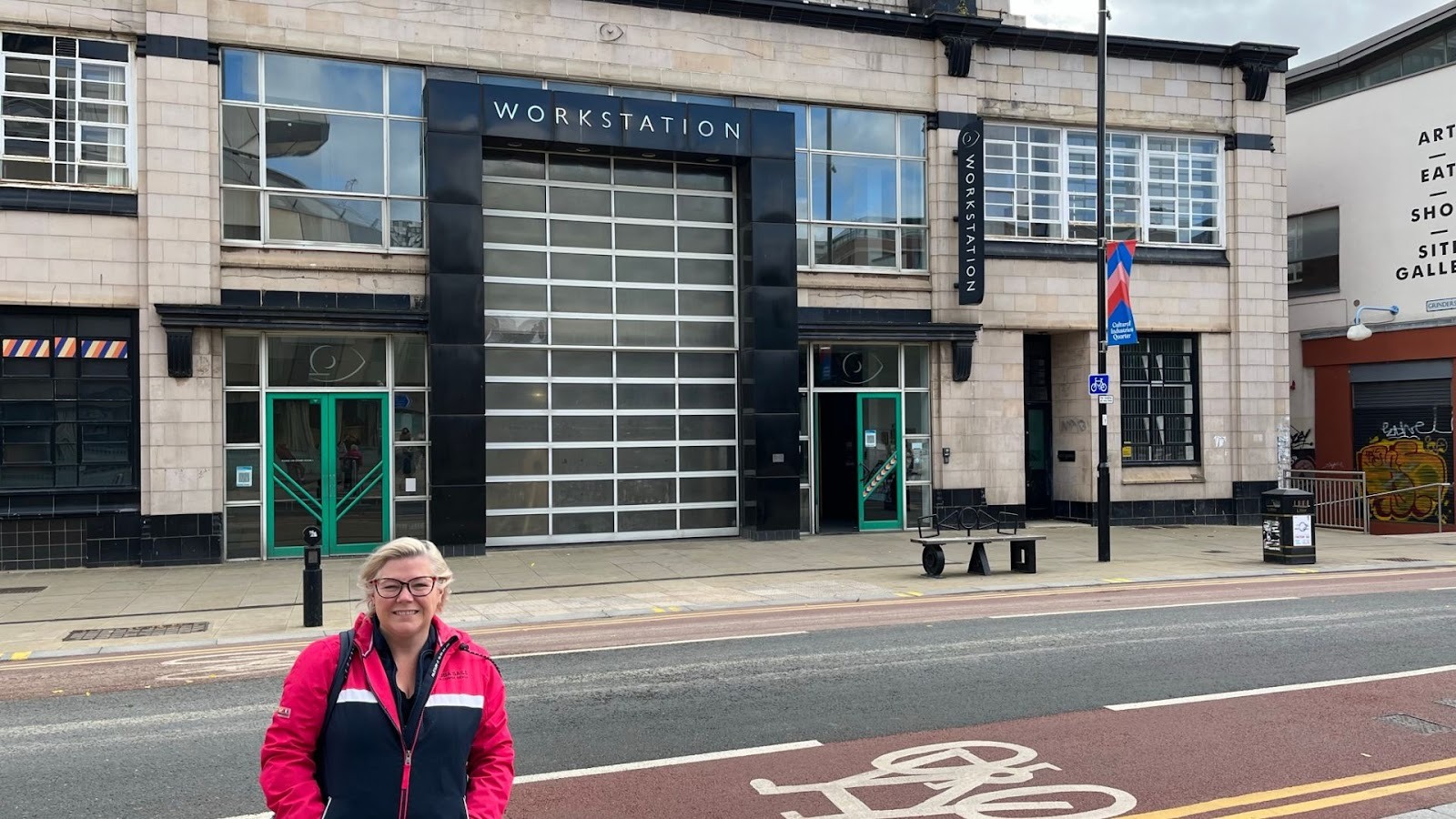
It’s a reminder of how fragile history can be and how much can be lost with time. My grandad’s younger brother, who remained in the family home, went on to have children, and his children went on to have families of their own. There is still a thriving family tree out there waiting for me to discover, threads of connection stretching across decades that my dad never knew existed. My dad passed away last year without meeting any of them, unfortunately, but I’m determined to reconnect the family. Maybe they don’t even realise my grandad ever existed.
Twins run in the family
As I continued my research, I stumbled upon a beautiful and unexpected connection. Twins. It turns out twins run down the females in my family on my dad’s side. Twins have appeared again and again (and again!). I had always wondered where my own non-identical twins came from. When people asked, I told them it was random as there were none in the family. Now I understand. It wasn’t a coincidence; it was a family legacy.
Some discoveries have been bittersweet. Among the twins I found in past generations were a pair of boys who died within weeks of each other at just two years old. Seeing their names and dates on burial records left me in bed, sobbing. It’s a reminder that genealogy isn’t only about celebrating births and marriages. It’s about uncovering the full and often emotional story of our ancestors. Their lives were real, and so was their heartbreak.
What ancestry has taught me
Through this journey, I’ve learned more than names and dates. I’ve learned empathy, resilience and the importance of connection. I’ve come to understand my dad and grandad in ways I never could before. Tracing my roots has given me a sense of belonging and perspective, linking me to people and places that existed long before I was born.
The thrill of uncovering a new connection is exhilarating. And it really is a puzzle. I have family members who just seem to vanish. Did they pass away? Did they move to a new city or a new country? I’m determined to find answers.
Tracing your history and getting started
If you’re curious about your own family history, it’s easier to start than you might think.
Online platforms like Ancestry and Findmypast are great tools for building a family tree and uncovering records. Searching birth, marriage and death certificates in your area can provide the evidence you need to expand your tree.
Your local library or archives often offer free access to subscription sites and historical records, and many run free drop-in sessions for support.
For me, I’ve been lucky to find that Sheffield’s burial records have been digitised and they have a fantastic database – searching for families buried together and people located in the same grave site has helped me discover relatives I didn’t even know about – so be open to finding localised records where you can, too.
If you want to dive even deeper, DNA testing can reveal connections you never knew existed. I’ve just mailed my DNA sample and can’t wait to uncover more relatives from my grandad’s side of the family.
Ancestry is the gift that keeps on giving
Tracing my family’s history has been an emotional rollercoaster of heartbreak, joy and fascination. What began as a passing interest has become a lifelong passion. Every record and story is a reminder that our history isn’t lost – it’s waiting to be discovered and shared again.
If you take that first step into ancestry, be warned – you might find yourself hooked. But in that obsession lies a gift: the chance to keep those stories alive for future generations.

Articles we think you’ll love: