
Travel
Puglia: the Italian road less travelled
Head south to the ‘heel’ of Italy’s boot to see how the locals live.
By Paula Goodyer
Thinking of holidaying in Italy? Rome, Venice, Florence or the Amalfi Coast are big drawcards yet there are so many reasons to head south along roads less travelled to Puglia, the ‘heel’ of Italy’s boot-shaped peninsula. The same ingredients are there: layers of ancient history on show at every town and wonderful food to fuel the sightseeing - but a more relaxed pace with fewer crowds, and less pricey too.
Want tips on beating the crowds? Try this
Where to get the best of Puglia
Puglia’s towns and countryside are so rich in history and natural beauty that you’re spoilt for choice. A good approach is picking one or two towns to act as a base for taking day trips to explore other places. We used local buses and trains (efficient and impeccably clean) which probably made for a more authentic experience - but the advantage of hiring a car is that you can reach more places in one day.
History a little closer to home.
To Bari and beyond
We started in the port city of Bari on the Adriatic coast, which, like other towns in this region, is easy to navigate on foot. A highlight is its old city (Bari Vecchia), a maze of twisting lanes and buildings dating from the 11th century - and a former stronghold of crime families. Now you’re more likely to meet women selling handmade orecchiette (ear-shaped pasta typical of Puglia) or pilgrims heading to the Basilica di San Nicola, the 12th century church which holds the tomb of the real Father Christmas - St Nicholas, the 4th century bishop whose kindness and generosity became the inspiration for Santa Claus.
Nearby is the stunning Santa Scolastica Archeological Museum built partly on the remains of a medieval Benedictine monastery and not to be missed.
But if you’re also in the mood for shopping - and can find your way out of the labyrinthine old city - visit the elegant Via Sparano - and add some Italian style to your wardrobe .
For trips beyond Bari, there’s the historic clifftop village of Polignano a Mare, the UNESCO Heritage listed Alberobello, famous for its centuries old beehive shaped houses or the limestone cave complex, the Grotte de Castellano.
Why Matera is a must
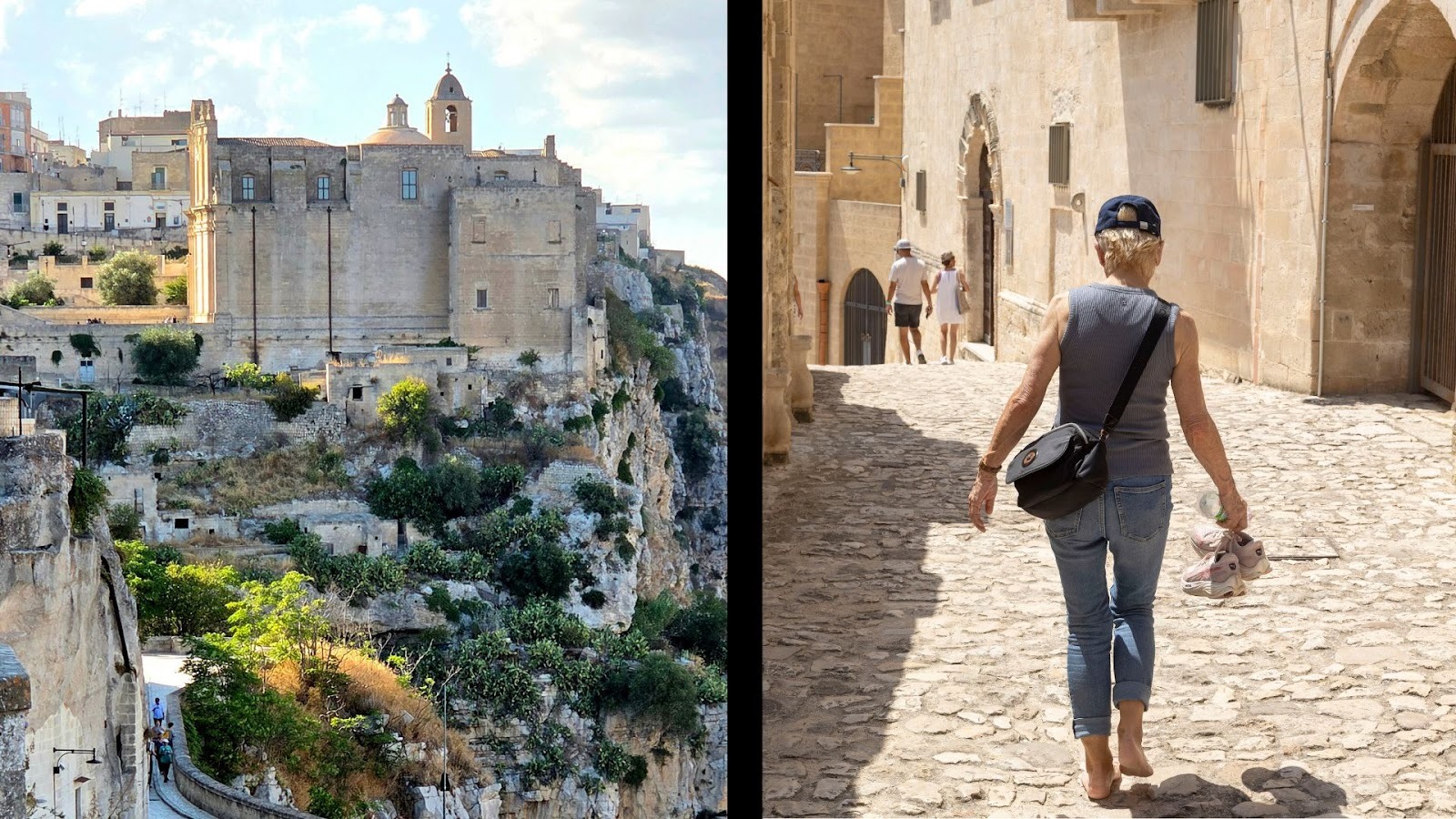
Imagine this: it’s the Stone Age and a bunch of humans stumble across a perfect place to live: a beautiful ravine with a stream, and limestone walls pocked with caves, making ready-made homes. This ravine has been occupied ever since, with homes, churches and workshops built into the natural caves over time, creating an ancient town criss-crossed with cobbled lanes leading to the top of the ravine where Baroque palaces sprung up in the 17th century.
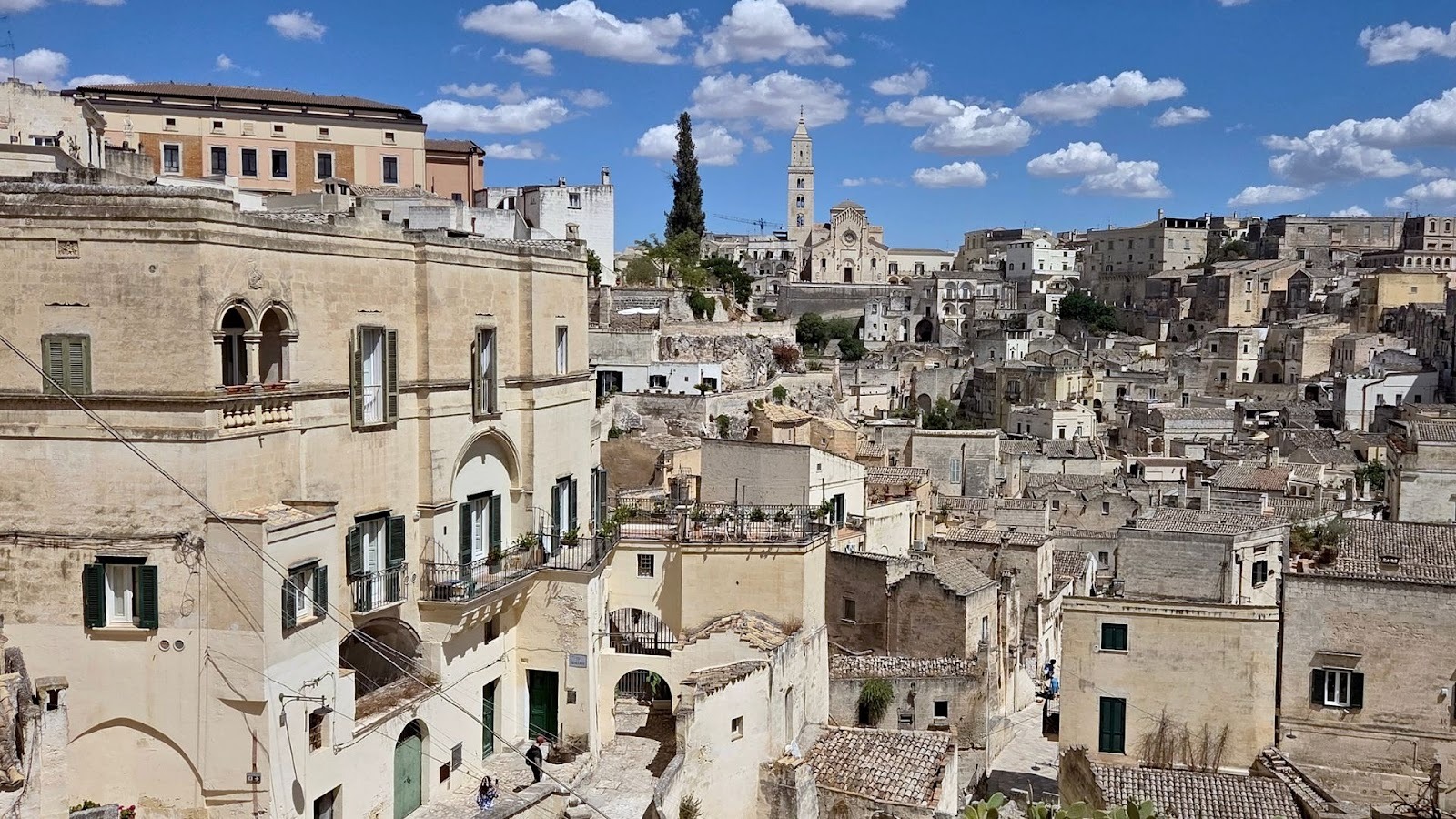
This is Matera, another UNESCO Heritage listed site, and although it’s seeable on a day trip from Bari, you’d barely scratch the surface. Take at least three days to take in the atmosphere and beauty of a place occupied since Paleolithic times.
Lecce: the Florence of the South
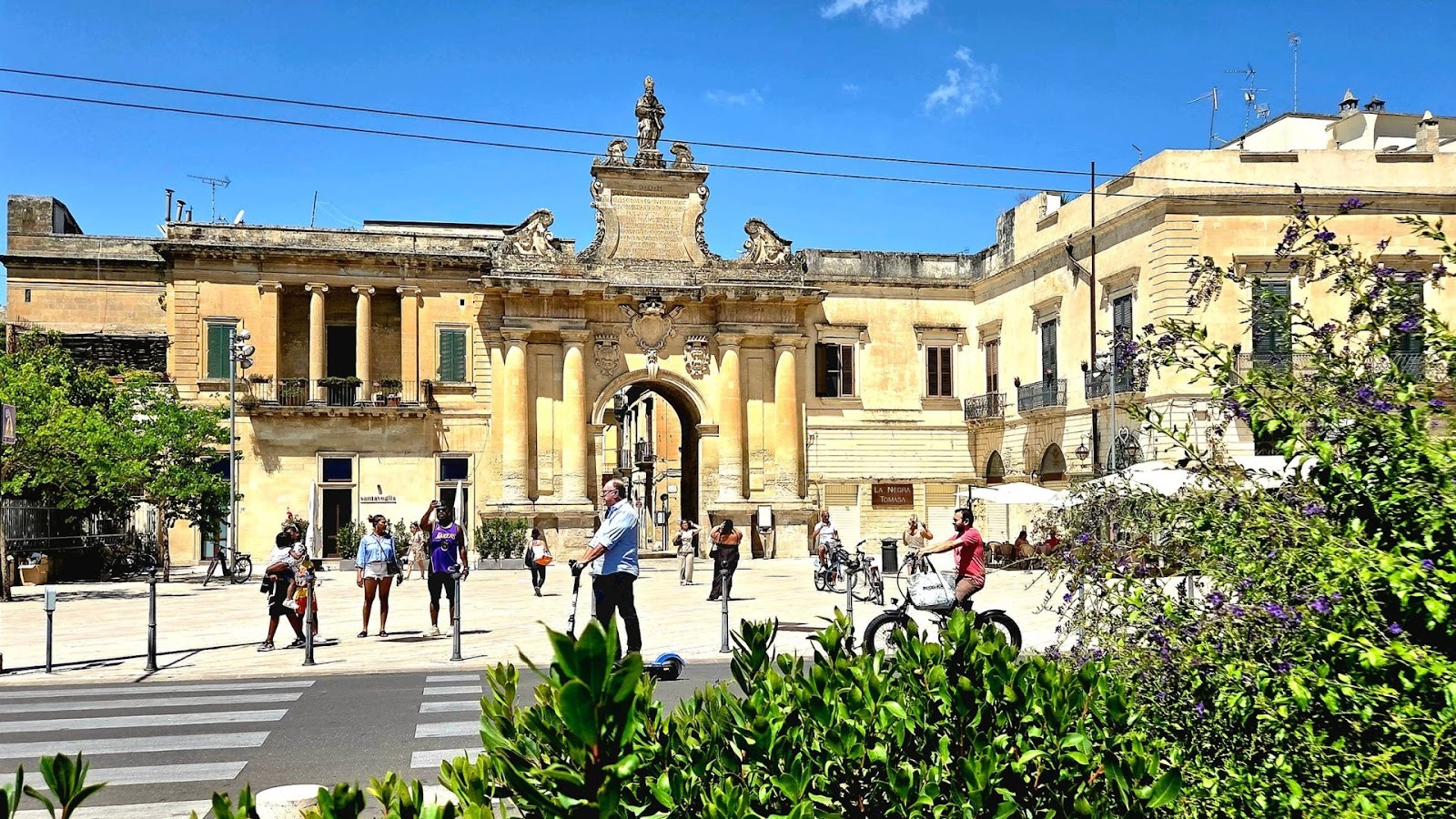
Lecce’s big attraction is its Baroque architecture on show in the city’s churches, palaces and elegant squares but its origins stretch back before the 17th century, and close to a Baroque cathedral there’s a 2nd century Roman amphitheatre discovered by workers excavating to build a bank in 1901. But to really walk among Lecce’s layers of history, see the amazing Faggiano Museum, a private house where an attempt to fix a sewage pipe by digging under the building in the early 2000s revealed the family was living above a maze of chambers dating back 2,000 years.
Access to these areas is now via twisting stairways leading you to traces of lives lived centuries before: a small child’s tomb from the Bronze Age, a Roman granary, frescoes from when the Knights Templar lodged there en route to the Crusades, traces of a Franciscan priory and much more.
Peer through a gap in one wall and you’ll see a passageway leading back to the Roman amphitheatre. There are many fine archaeological museums in southern Italy - like that in Bari - but the intimacy of this space and the physical closeness to so much ancient stone whisks you back to earlier times like no other - and all for an entrance fee of five euros.
Lecce also makes another good base for exploring more places like the ancient towns of Ostuni, and Gallipoli
Best time of year to visit
We went in Puglia’s hottest months, July and August, figuring that living in Australia qualified us to cope with southern Italy’s high temperatures - and it did. But it’s smarter to go in cooler months in case midsummer temperatures soar into the upper 30s or even 40s. Also, going off-peak season can sometimes save you a bundle on flights, accommodation and activities.
Here’s some insider secrets to reduce travel costs.
What to eat: simple and delicious food
Southern Italy is the home of cucina povera which roughly translates as poverty cuisine - but don’t let the name put you off. It’s a celebration of the art of turning simple, inexpensive ingredients into meals that can be as healthy as they are delicious like orecchiette with broccoli rabe. There’s not much fast food where we went - but you can make do with panini stuffed with roast vegetables, or focaccia made with semolina, topped with (more) vegetables and breadcrumbs cooked in olive oil.
What if you can’t speak Italian
It’s good to know some basic words and phrases to help you shop, order food and get around - we practised beforehand with the wonderful (free) Duolingo for just a few minutes each night. But in our experience, most people we spoke to had some English and when they didn’t, our few words of Italian somehow got us through.
Want to learn a language? Start here
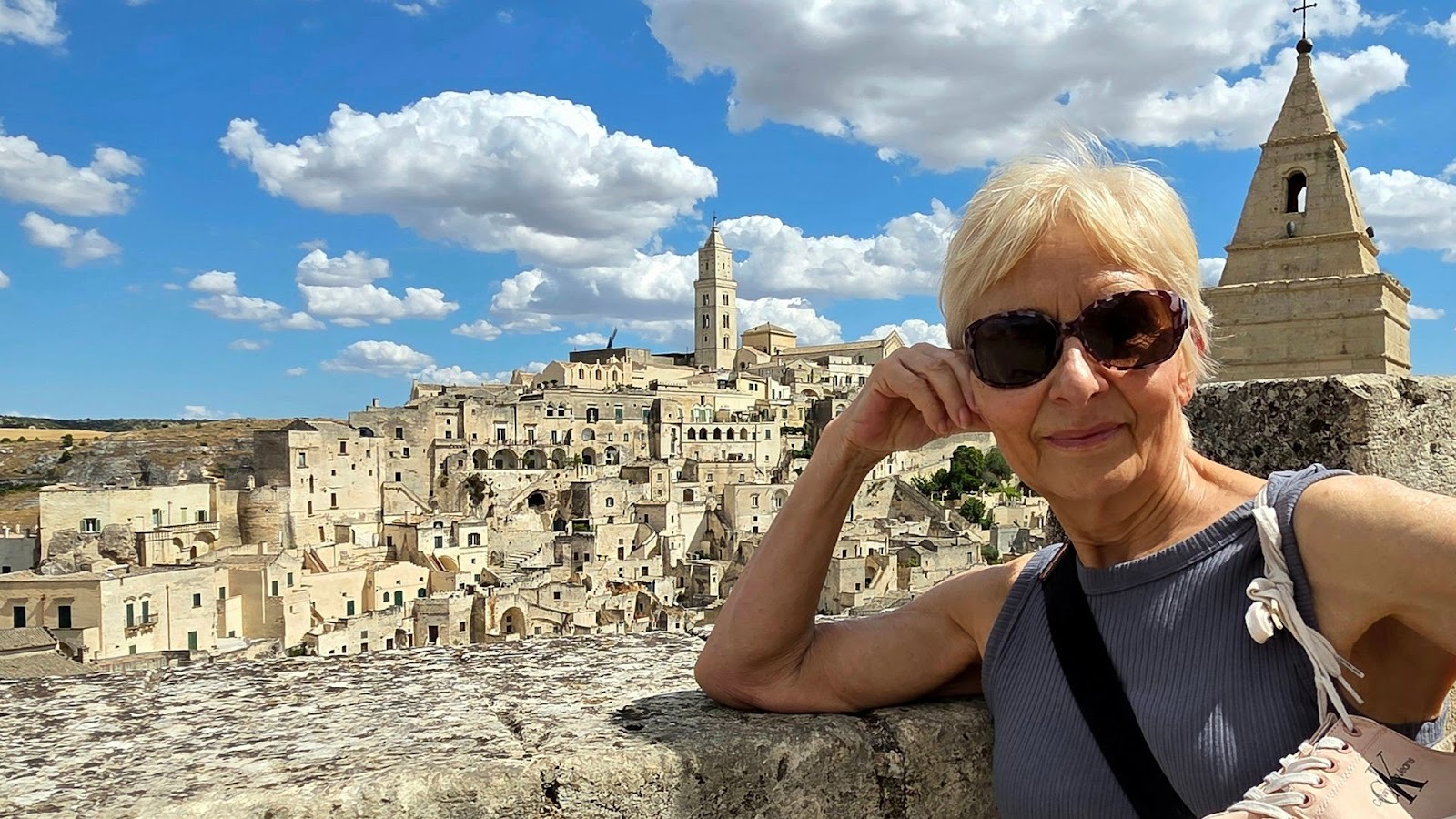
Feature image: Paula with Matera in the background. Rick Stevens Photography

Articles we think you’ll love: