
Money
From scarcity to confidence: how Kylie changed her money mindset
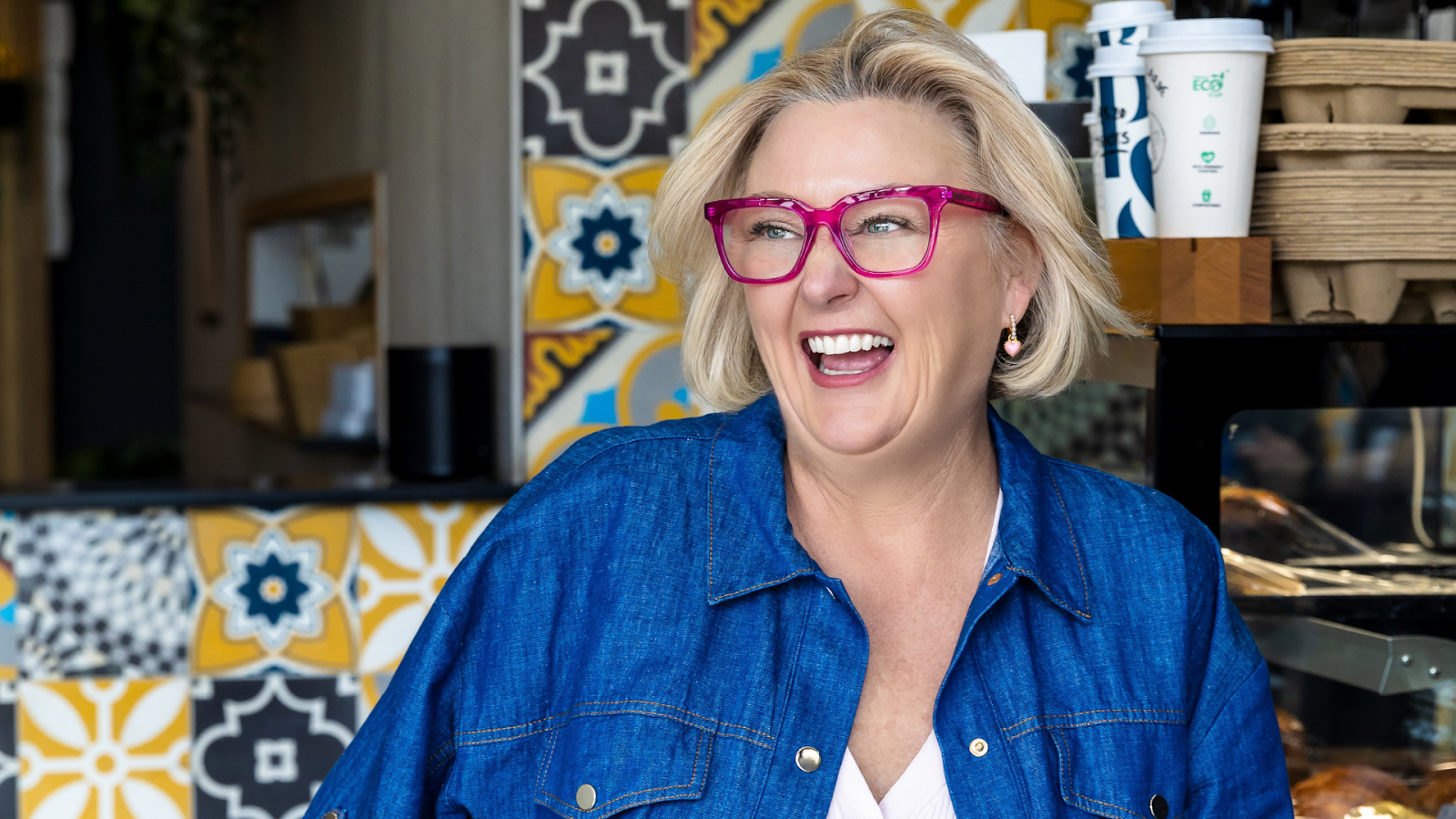
Kylie Sultana, 54, grew up with blurred money boundaries and a scarcity mindset, but she now sees money as a source of choice, confidence, and balance.
As told to Elli Jacobs
Growing up, we never really talked about money; it simply wasn’t a topic of conversation. Money wasn’t something you ever planned or strategised about. It was simply something that appeared and disappeared.
I lived with my aunt, and the expectations for my future were clearly defined and never up for discussion. I was expected to marry and have children, anything beyond that was considered unnecessary. Continuing my education past Year 10 was not encouraged, so I didn’t. The path laid out for me was simple: leave school, find work, marry a hardworking man who could provide and regard that as success.
Those beliefs weren’t my aunt’s alone. They were reinforced by my entire family. We all lived in government housing, with no alternative models of financial independence. There were no conversations about business, investing, or home ownership. The assumed path was to apply for housing commission, wait, and rely on that for security. That was considered stability – even the dream.
Boundaries around existing money were also porous. Everyone knew each other’s finances, and if someone had a little extra, sharing was expected. Financial privacy and autonomy weren’t part of the culture. Saving was never encouraged. If money came in, it went out – easy come, easy go.
As a teenager, I didn’t feel deprived, but I noticed the contrast when I visited friends’ comfortable homes with pools and carefully chosen furnishings. We had second-hand furniture and basic government housing. I quietly wished for a different kind of life, even test-driving new cars in my twenties – yet I never truly believed those things were meant for someone like me.
Money mixed with morality
Beneath it all, a quiet belief took root: wealthy people were somehow ‘suspect’. If someone drove a nice car or appeared well-off, the assumption was that they had cut corners or done something illicit. Wealth carried a hint of moral compromise.
That belief worked in a subtle but powerful way – it made having very little feel somehow virtuous. If money was corrupting, then going without it meant you were ‘good’. And if I were ever to have wealth, I feared others would assume I had done something wrong to earn it.
And yet, something in me quietly resisted that script. I began working young, carrying a stubborn inner resolve: I can’t live like this forever; I don’t want this to be my ceiling.
When I entered the world of finance, I found myself among colleagues who owned homes, invested, and spoke easily about mortgages and long-term plans. They were in stable partnerships, building assets, shaping deliberate futures. They didn’t try to convince me of anything; they simply lived differently. And in their ordinariness, they revealed something quietly radical: another life was possible.
A different model of success
I met my husband, Anthony, when I was twenty-four. He came from a hardworking Maltese immigrant family who had laboured tirelessly to build a better life in Australia. Their story was different from mine. There was discipline, long-term vision, and an assumption that effort translated into progress.
When we met, I was carrying significant debt, and that created tension early on. But I was fiercely independent. I didn’t want to be rescued. I wanted to prove to him and to myself that I was capable.
We planned a trip to Europe together. I had always dreamed of travelling – even of living in London one day – but I had never believed I could truly afford it. With Anthony’s encouragement, I began saving intentionally for the first time.
That experience was transformative. I saw, perhaps for the first time, what money could do when it was managed rather than immediately spent. If I didn’t allow it to slip through my fingers, it could accumulate. It could open doors. It could fund experiences I had only imagined from a distance.
Anthony already owned an investment property when we met, and after our engagement on that European trip, we moved in together. Contributing to the mortgage marked a quiet but profound shift within me. For the first time, I could see tangible progress. We weren’t simply getting by; we were building something. There was a steady sense of forward movement, unfamiliar, yet deeply empowering.
Managing money with purpose
From early in our relationship, we developed the habit of sitting down together to review our finances. We still do. In those early years, it was straightforward - budgeting for the mortgage, bills, savings and personal spending. We would allocate money for practical things like hair appointments, utilities, and small discretionary expenses.
This habit created rhythm and structure. Over 27 years of marriage, that rhythm has evolved as we added investments and assets, but the foundation of transparency and shared planning has remained.
It wasn’t easy at first. I struggled with overspending and the guilt that followed, rooted in long-held shame around money. Recognising my lack of self-control with a credit card, I chose to remove the temptation by giving it up. Now, I keep one card with a fixed monthly limit, and all other spending is discussed.
What once felt like restriction became a form of freedom through structure. I also learned to manage emotional spending by “surfing” the urge - sitting with it until it passed, rather than acting on impulse.
Small habits building a big future
Being with someone who approached money differently showed me that financial skill isn’t a character flaw. My husband is excellent with money, and when I realised he wasn’t judging me but seeking partnership, not control, everything changed. We did argue, discussing spending used to feel like an attack, but once I found the courage to say, “I feel judged,” he began prefacing conversations with, “I’m not having a go at you, but we need to talk about this.” That small shift made me feel safe to engage.
I also stopped avoiding money. For years, I let him handle the bills to escape it. Taking responsibility and understanding the true cost of running our household – insurances, mortgage, everything – gave me clarity and a sense of power.
When we had children, another layer emerged. I was working full-time in a stockbroking firm – after completing a Diploma in Financial Planning – when our first son was born. At one point I was earning more than Anthony and we genuinely discussed whether he should stay home instead of me. It was not a symbolic conversation, it was practical.
In the end, I chose to step back for a period because I wanted to be present with our children. I had not experienced the kind of nurturing I longed for, and I was determined to offer something different to my children.

I returned to work when our boys were around nine and eleven months old. Childcare was expensive, even then, and we sometimes questioned whether it made financial sense. But for my mental wellbeing, it did. I needed to feel that I was contributing. I carried a deep fear of being perceived as a ‘bludger’ – a fear rooted directly in my upbringing. I wanted to be someone who worked hard, who added value, who stood on her own two feet.
My new money story
Over time, I began to understand that my relationship with money was never simply about income. It was about worthiness. That insight did not arrive all at once. It unfolded gradually, particularly through my 40s.
For much of my life, I didn’t feel worthy of having nice things. Even when we worked hard and achieved stability or success, I would downplay it. Speaking openly about holidays, investments or assets felt almost improper, as though acknowledging them might expose me. And yet we had earned them.
The deeper work has been untangling achievement from shame, prosperity from guilt, and success from suspicion. It has been recognising that building a secure life does not betray where I came from. It simply expands what’s possible.
Rewiring my money mindset started with awareness. For me, awareness meant sitting with myself and asking hard questions. Where am I? What am I doing? Why am I repeating this pattern? Instead of saying, “This is just how I was raised” or like “I’m bad with money” or “I’ll never get ahead,” I had to shift into, “I can change this.”
But it’s taken time. I’m 54 now, so this has been a 20-year process. I sometimes think if I’d had a support system earlier and different language around money, I could have accelerated things. I was earning good money when I worked at ANZ Bank, but without the mindset, I just coasted and wasted it.
The importance of relationships
I think the moment I stopped surviving with money and started thriving was when I made a conscious decision to distance myself from my aunt, who I grew up with and who I felt had judged me my whole life.
When I stepped back from that relationship and started working on myself is when things really shifted. It wasn’t just financial. It was internal. As I built my confidence, that flowed into everything else, including money. And like money, it compounded. The more I backed myself, the more confident I became making financial decisions with my husband.
Now, I believe money is for freedom. It gives us choice. We travel two or three times a year. We’ve taken our children to Europe and America. We can decide where we live, what we invest in, how we spend our time. That’s what money is for – options.
Releasing fear around money also means raising children who are financially confident. Our eldest, now 26, recently bought an apartment with his partner, and both our sons are disciplined savers and investors.
We intentionally taught them money literacy from a young age, involving them in budgeting, explaining interest, encouraging early jobs, and investing their savings for them.
When they paid board, we invested it and returned it at 21, giving them a meaningful head start. That is generational change.
How you can change your money mindset
If you recognise yourself in my story – the shame, the scarcity, the emotional reactivity – I want you to hear that you are worth it. You can change your money mindset too, just take one small step. Stop listening to the voices that say you’re not capable and look at what you actually want, not what your family thinks you should want.
The first step is noticing these beliefs in your behaviour today. Then you gently question whether they’re actually true and replace them with more supportive ones – not fake affirmations, but small, believable shifts.
Finally, you reinforce your new money story with consistent actions. Over time, those actions become evidence, and that’s what really changes your money mindset. For me, it took years and the support of my husband, who had a very different relationship with money to get here.
Helping other women
I also realised how much messaging is aimed at women – telling us we’re ‘bad with money’, that ‘shopping is our weakness’, that ‘men should handle finances’. If you hear something often enough, you believe it. I had to consciously reject that narrative.
That gap is part of why I started my business, The Money Brew. I’ve seen too many women left financially vulnerable: women who stayed home to raise children and then had nothing after divorce, women who unknowingly took on a partner’s debt, women whose superannuation suffered because they were caregivers. Protecting yourself financially is not selfish, it’s responsible.
Looking back, I think the biggest shift wasn’t about numbers. It was about worthiness. Once I believed I was worthy of stability, choice and success, the money followed.
Feature image: Captured by Kirri
This article contains general information only. It is not financial advice and is not intended to influence readers’ decisions about any financial products or investments. Readers’ personal circumstances have not been taken into account and they should always seek their own professional financial and taxation advice that takes into account their financial circumstances, objectives and needs.
Tell us in the comments: How’s your money mindset? Got any tips for someone who is struggling?
More help for money shifts: