
Money
The retirement gender gap that should worry all of us

New research shows women are entering retirement more anxious, less confident and more financially cautious than men, and it’s a shared issue we can’t afford to ignore.
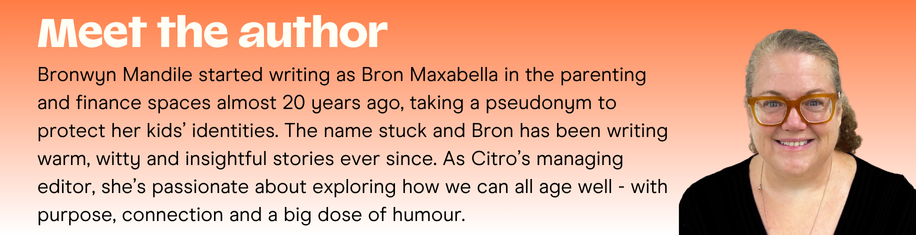
By Bron Maxabella
If retirement conversations feel a little heavier for the women in your life, it’s not your imagination. New research from AMP has revealed that when it comes to retirement, Australian women are far more worried than men. And while it’s often framed as a “women’s issue”, it’s actually a society-level problem that affects partners, families, workplaces and, ultimately, the public purse.
Fresh data from AMP’s latest Retirement Confidence Pulse puts hard numbers around what many women have felt for years. Only 41% of women say they feel financially confident about retirement, compared to 59% of men.
Alarmingly, almost three-quarters of women are anxious about having enough super (compared to 56% of men). And more than half of them are cutting back on day-to-day life today to protect a future that still feels uncertain. Yet, interestingly, women are more likely than men to care deeply about leaving a financial legacy.
This combination of anxiety and responsibility is exhausting and it has real ripple effects.
“We cannot accept a future where Australian women remain more worried than men about their financial futures,” says Melinda Howes, AMP’s group executive, superannuation and investments. “Our research shows women are more anxious on every measure, and it’s no surprise given they retire with smaller super balances after years of pay gaps, part-time work and time out caring for others.”
The knowledge gap behind the gender gap
AMP’s Deputy Chief Economist Diana Mousina points to a broader issue. Australia’s gender financial literacy gap is larger than in comparable countries like the US, the UK and Germany. Only a third of women understood compounding returns before age 40, compared to more than 60% of men. Women are less confident in the super system itself and less likely to have sought financial advice for retirement.
OECD data backs this up, showing Australian women consistently score lower on financial literacy measures than men and that literacy has a statistically significant link to retirement savings.
“The retirement confidence gap we’re seeing among women is the predictable result of a long-running financial literacy gap,” says Diana. “More than one in three Australian adults are financially illiterate and, worryingly, women consistently score lower than men – with Australia’s gender literacy gap larger than in many comparable countries.
“That lack of knowledge is clearly contributing to a lack of financial confidence in the future.”
This is compounded by a cold, structural reality. Women live longer, on average they outlive men by around four years, according to the ABS. That means lower balances stretched over more time. When women run out of money, the safety net is usually the Age Pension and the healthcare system.
The HILDA Survey, which tracks Australian households over time, shows persistent gaps in wealth accumulation linked to time out of the workforce and part-time work, roles still disproportionately taken on by women. Grattan Institute analysis has also highlighted how super tax concessions favour higher earners, who are more likely to be men.
How early gaps become later stress
This matters because retirement confidence doesn’t magically appear at 60. It’s built through education, familiarity, small decisions and, importantly, feeling entitled to ask questions. If women are less engaged earlier, the gap compounds over time, just like super does.
This knowledge gap also greatly impacts women when relationships fail, something that’s being amplified by the rise of grey divorce. Divorce or separation hits women’s retirement confidence far harder than men’s. Among separated women in their 40s, just 21% feel confident about retirement, compared to 50% of men in the same boat. For single women with kids, it drops to a startling 19%.
If that doesn’t ring alarm bells for policymakers, employers and families alike, it should.
Why policy alone won’t close the gap
Yes, structural change is happening. Pay equity reforms, super on paid parental leave and the upcoming workplace gender equality policy are all steps in the right direction. But as Melinda Howes says, it’s not enough on its own.
The education system can do better at developing deep financial know-how at the grass-roots level for both genders. Employers can normalise financial education at work. Couples can reconsider outsourcing money conversations to “whoever’s better at it”. And super funds can keep meeting people where they are, with accessible advice and clear language.
“Women can take back control by engaging with their super, knowing their fund, checking their balance and investment options, and feeling confident to ask for help. These are areas where women still lag men, an unfortunate hangover from a bygone era where men typically managed the finances,” says Melinda.
Practical ways women can build confidence
For women, the message is not “do better”, it’s “you deserve better”. AMP suggest 4 practical steps women can take now to start building their retirement confidence:
- Get to know your super: Log into your account, check your balance, fees and investment options and make sure your super is all in one place. Knowing where you stand is the first step to feeling in control.
- Ask for help – early: “The good news is help has never been more accessible. Many super funds, including AMP, now offer digital and phone-based financial advice at no extra cost,” says Melinda. “We encourage any woman who feels uncertain to start by contacting her fund... With the right information and a few simple steps, they can take control and feel more confident.”
- Empower your future self where you can: Even small, regular extra contributions – such as salary sacrificing, super splitting with your spouse or diverting a pay rise into super – can add up significantly thanks to compounding over time. Building a plan around these contributions can help turn worry into a sense of progress.
- Get a boost for your balance: Visit the ATO’s website to learn more about the range of policies in place to help you boost your super, including super paid on Government Paid Parental Leave, Government co‑contributions, Low Income Superannuation Tax Offsets (LISTO), spouse contribution tax offsets, spouse contribution splitting, and downsizer contributions for those 55+.
This article reflects the views and experience of the author and not necessarily the views of Citro. It contains general information only and is not intended to influence readers’ decisions about any financial products or investments. Readers’ personal circumstances have not been taken into account and they should always seek their own professional financial and taxation advice that takes into account their personal circumstances before making any financial decisions.
Feature image: iStock/Portra
Tell us in the comments below: How confident are you feeling about money in retirement?
Learn more about retirement wealth: